Ticks, sandflies and leishmaniasis: protecting a dog in the Mediterranean
In southern Europe the dangerous bites are the ones you never see. Ticks carry four serious diseases, a sandfly the size of a pinhead carries leishmaniasis, and a tablet that kills ticks does not stop a sandfly. Which product does which job, whether you live here, holiday here or adopt from here.
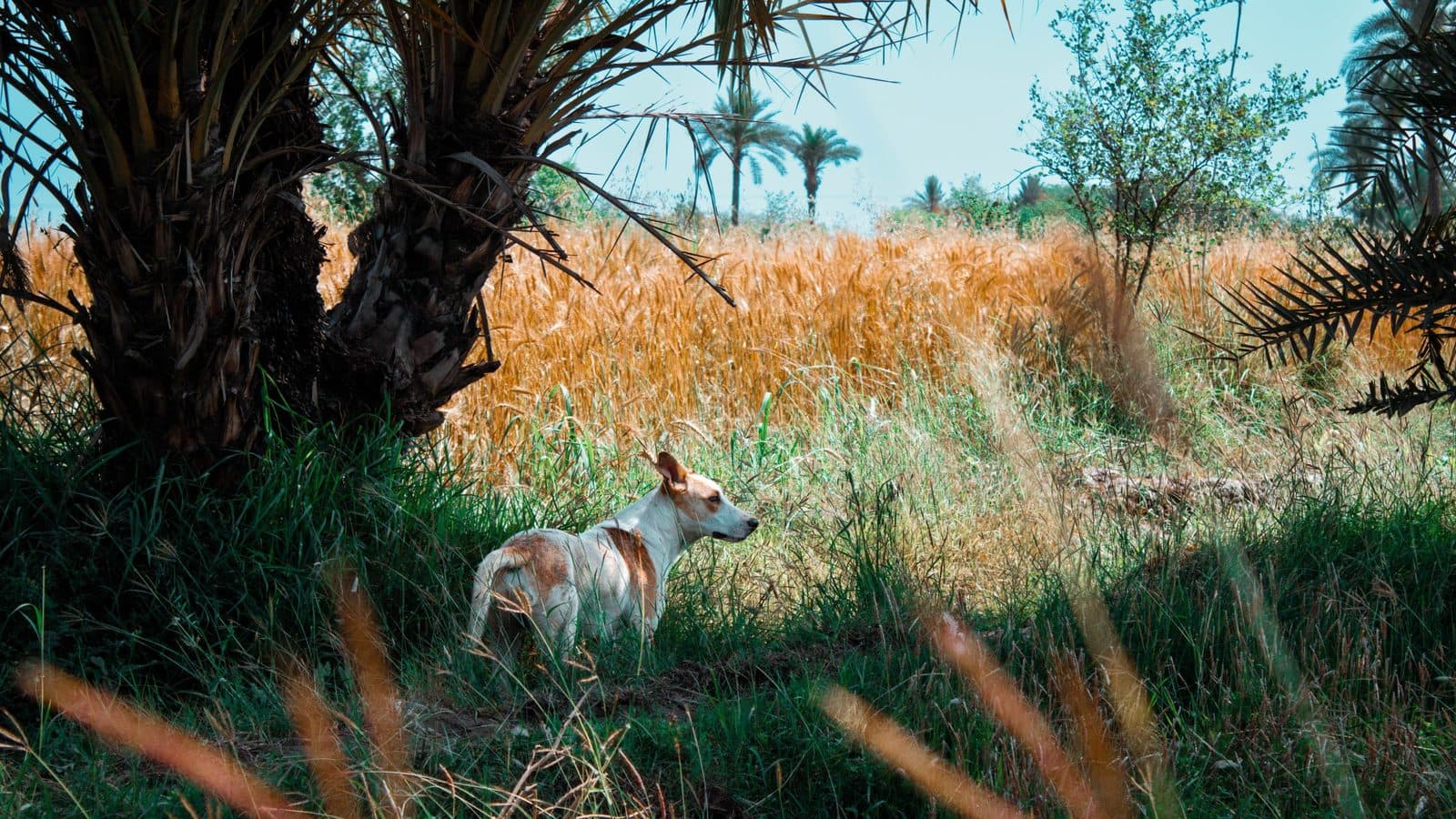
North of the Alps, parasite control is mostly about comfort: fleas itch, ticks are unpleasant. Around the Mediterranean it is about disease. The coast from Portugal through Spain, southern France, Italy, Croatia, Albania and Greece to Turkey and Cyprus is home to a set of infections carried by ticks, sandflies and mosquitoes that are rare or absent further north, and several of them are lifelong once caught.
This matters to three groups of people: those who live here, those who bring a dog on holiday, and those in northern Europe who adopt a dog from the south. The risks are the same; the mistakes are different.
The one distinction that changes everything
Killing a parasite and repelling it are not the same job.
The modern chewable tablets (the isoxazolines: Bravecto, NexGard, Simparica, Credelio) are excellent at killing ticks and fleas. But they work from inside the dog: the parasite has to bite and feed before it dies. For most tick-borne diseases that is acceptable, because transmission usually takes many hours. For a sandfly it is useless. The sandfly bites, injects the leishmania parasite in seconds, and whether it dies afterwards makes no difference to your dog.
To prevent sandfly bites you need a repellent: a pyrethroid that stops the insect landing and feeding in the first place. Those come as collars and spot-ons, never as tablets.
Most cases of leishmaniasis in well-cared-for dogs come down to this: an owner who was, quite reasonably, proud of never missing a tablet.
Leishmaniasis
What it is. A microscopic parasite, Leishmania infantum, spread by the bite of female phlebotomine sandflies: tiny, sand-coloured, silent, about a third the size of a mosquito. In endemic areas a meaningful share of dogs carry it, in some regions more than one in ten.
When and where the risk is. Sandflies are active in the warm months, roughly April or May to October or November depending on how far south you are, and from dusk to dawn. They are weak fliers, stay close to the ground, dislike wind, and breed in cracks in walls, rubble, animal sheds and garden debris, so gardens, villages and the edges of towns are riskier than a breezy beach or a city centre high-rise.
What it does. Nothing, for a long time. The incubation period runs from three months to several years, so a dog infected on holiday in August may fall ill two winters later, and nobody connects the two. Then, slowly:
- weight and muscle loss with a normal appetite;
- hair loss and scaly skin, classically around the eyes, on the ear edges and the nose; sores that will not heal;
- claws that grow abnormally long and curved;
- nosebleeds; swollen lymph nodes; sore eyes; shifting lameness;
- and, most seriously, kidney damage, which is what usually shortens these dogs' lives.
Treatment. It can be controlled, often for years, but in most dogs it is not cured. Treatment is a month of injections or an oral drug, plus a daily tablet (allopurinol) for many months, with blood and urine checks two to four times a year for life. Dogs treated early, before the kidneys are involved, can live long and well. That is the argument for testing.
Can people catch it? The same parasite does infect humans, through sandfly bites, not from touching a dog. In healthy adults it is rare; small children and people with weakened immune systems are at more risk. Protecting dogs lowers the amount of parasite circulating, which protects people as well.
Ticks
The main tick of the Mediterranean is the brown dog tick, Rhipicephalus sanguineus, which is unusual in that it happily completes its whole life in kennels, garages and houses as well as outdoors. Between it and its relatives, dogs here are exposed to:
- Ehrlichiosis. Fever, lethargy, then bleeding problems: nosebleeds, bruising, very low platelets. Can become chronic. Transmission can begin within a few hours of attachment, faster than most.
- Babesiosis. The parasite destroys red blood cells. Sudden weakness, pale or yellow gums, dark red-brown urine, fever. An emergency.
- Anaplasmosis. Fever, sore joints, lethargy, low platelets.
- Hepatozoonosis. Caught by swallowing a tick while grooming, not by being bitten. Fever, muscle pain, wasting.
Dogs frequently carry more than one of these at once, and alongside leishmania, which makes each of them worse.
The daily check. In tick country, run your hands over the dog every evening: inside and behind the ears, around the eyes and lips, under the collar, the armpits, the groin, between the toes, under the tail. A tick that has been on for an hour has transmitted almost nothing.
Removing one. Use a tick hook or fine tweezers, grip right at the skin, and lift with steady pressure (with a hook, twist as its instructions say). Do not squeeze the body, and do not use oil, alcohol, petroleum jelly or a match: a stressed tick regurgitates into the wound, which is precisely what you are trying to prevent. Note the date on the dog's profile; if the dog falls ill within the next few weeks, your vet will want to know.
Heartworm, briefly
Mosquitoes across much of Italy, Greece, the Balkans and Iberia carry Dirofilaria immitis, a worm that grows to 20–30 cm in the heart and lung arteries. Treatment is long and risky; prevention is a monthly tablet or spot-on, or a yearly injection, that kills the larvae before they mature. If you live in or travel to an endemic area, ask for it by name. It is not part of an ordinary worming routine.
What to actually use
Talk to a vet who knows the area, and expect a combination rather than a single product:
| Job | What does it | Notes |
|---|---|---|
| Repel sandflies (and ticks) | Deltamethrin collar (Scalibor) or flumethrin/imidacloprid collar (Seresto) | Collars need about a week to reach full effect. Put them on before you travel. Last 5–12 months depending on the product. |
| Repel sandflies, shorter term | Permethrin spot-on (Advantix, Vectra 3D and others) | Works within a day or two; renew every 3–4 weeks. Useful for holidays. |
| Kill ticks and fleas reliably | Isoxazoline tablet | A good partner to a repellent, not a replacement for one. |
| Heartworm | Monthly preventive or yearly injection | Start before exposure and continue a month after. |
| Leishmania vaccine | LetiFend (licensed in the EU) | Lowers the chance of developing disease; does not stop infection. Used with repellents, never instead. Dogs are tested before the first dose. |
A warning about cats. Permethrin is highly toxic to cats. Never put a dog spot-on on a cat, and keep a cat away from a freshly treated dog until the product has dried, which usually means separate sleeping arrangements for a night or two.
And the free measures, which matter more than they sound:
- Indoors from dusk to dawn during sandfly season. This alone removes most of the exposure.
- Fine-mesh screens on windows, or a fan where the dog sleeps: sandflies cannot fly against a breeze.
- No sleeping outside, in a shed or in a kennel at ground level.
- Clear rubble, woodpiles and leaf litter near where the dog rests.
If you live here
Make it a calendar, not a memory: a repellent collar renewed on time, a tablet on schedule, heartworm prevention through the mosquito months, and a yearly leishmania blood test, usually in late winter, so that an infection from last season is found before it shows. Putting each of those as a repeating reminder on the dog's profile in mypet care is ten minutes once, and is the part that fails most often in practice.
If you are visiting
Start two weeks before you leave: collar on, or the first spot-on applied. Keep the dog in at night. Check for ticks every evening and again when you get home. If your dog is unwell at any point in the following two years, tell your vet where you travelled; a vet in Hamburg or Manchester may go a whole career without seeing leishmaniasis and will not think of it unprompted. The paperwork side of the trip is in our guide to EU pet travel rules that catch people out.
If you adopt from the south
Thousands of dogs a year go from shelters in Spain, Greece, Romania, Cyprus and the Balkans to homes further north, and most are healthy. A responsible rescue tests before travel, but a test soon after infection can be negative. So: ask for the results in writing, have your own vet repeat the leishmania test about six months after arrival, and once more a year later. Ask for tick-borne diseases and heartworm to be included. Keep the results with the dog's records; they are the baseline every future vet will want.
A positive result is not a reason to return a dog, and it is not a death sentence. It is a reason to start monitoring early, which is the thing that keeps these dogs well. Our guide to the first week with a rescue dog covers the rest of those first months.
The short version
A tablet for ticks, a collar or spot-on that repels, heartworm prevention where it is endemic, indoors after dark in the warm months, a nightly tick check, and a yearly blood test if you live here. None of it is expensive, and every part of it is cheaper than the disease it prevents.