Your dog pulls on the lead: why, and the method that fixes it in weeks
Pulling is not stubbornness and it is not dominance. It is a habit the walk itself has been training, one step at a time. The two rules that undo it, the equipment that helps, and the part most people get wrong.
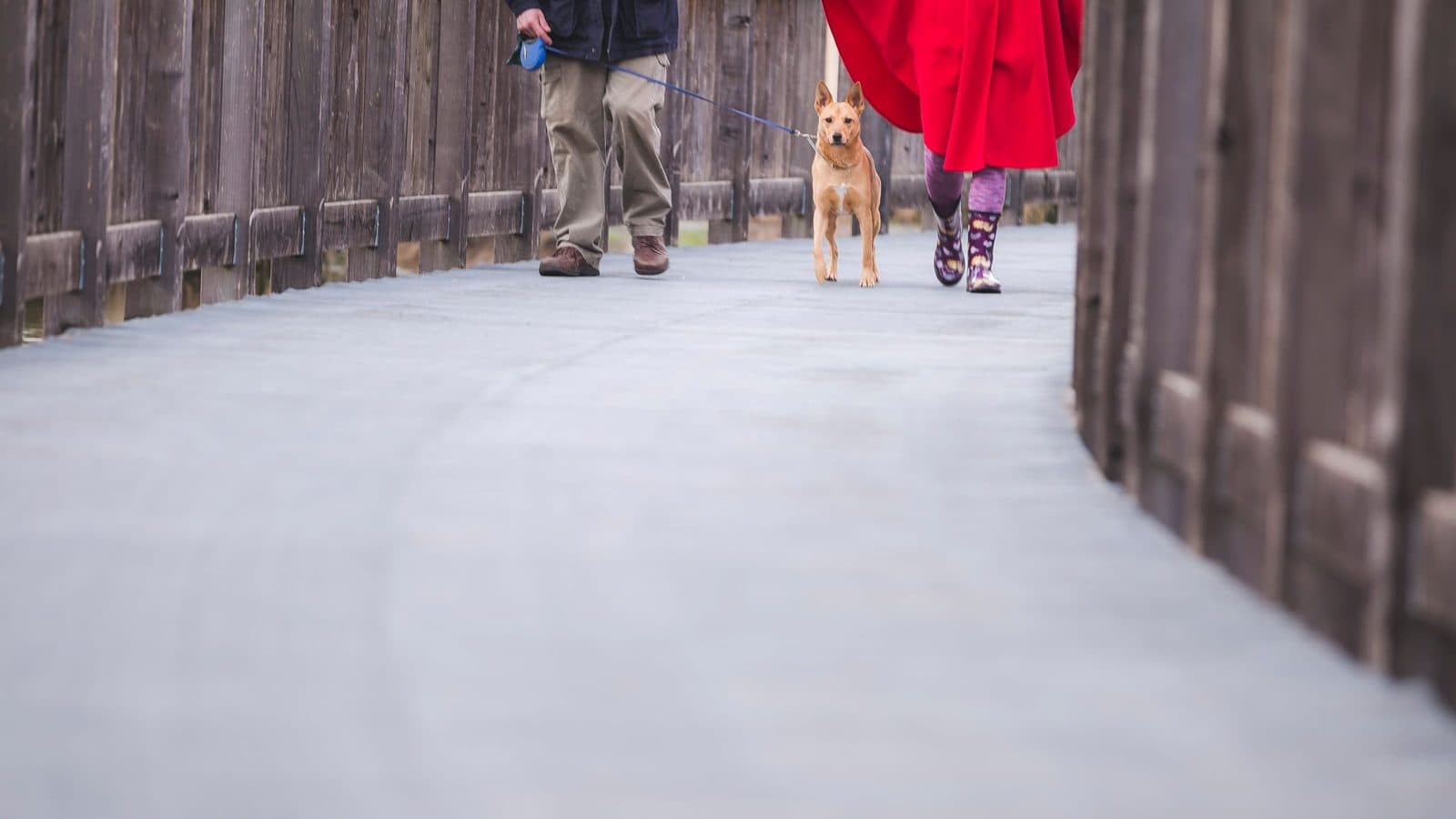
Ask a hundred dog owners what they would change about their dog and a large share will say the same thing: the pulling. Sore shoulders, a dog at the end of a tight lead, a walk that feels like being towed. It is the most common reason people give up on walks, which is a shame, because it is also one of the most fixable problems in dog training, and the fix does not need a special trainer or a gadget. It needs two rules and a few weeks of keeping them.
Why dogs pull
Not because they want to be in charge. That idea has been out of date for twenty years. Dogs pull for two much simpler reasons.
The world is in front of them and they walk faster than you. A dog's natural pace is a trot; yours is a stroll. Left to itself, every dog ends up at the front, and the lead goes tight.
Pulling has worked. Every time the dog pulled towards a lamppost, a smell, another dog, and got there, the pulling was rewarded. Thousands of times, over years. A tight lead has come to mean "this is how we move forward". The dog is not being difficult; it is doing exactly what the walk has taught it.
There is a third reason worth naming: some dogs pull because they are anxious or over-excited, and a tight lead makes that worse, because a dog straining against a collar cannot relax. Those dogs need the same method plus a calmer starting point, which usually means starting somewhere boring.
The two rules
Everything that works comes down to these.
Rule 1: a tight lead never gets the dog anywhere. The moment the lead goes tight, you stop. Not a jerk, not a word, just stop and stand like a post. The dog will look round, and at some point the lead will go slack, because the dog moves or turns. The instant it is slack, walk on. Tight, stop. Slack, go. That is the whole mechanism, and it works because it takes away the only thing that was keeping the pulling alive: it stopped working.
Rule 2: being next to you is the best place on the walk. Stopping teaches the dog what does not work. This teaches what does. Every time the dog is beside you on a loose lead, even for two steps, say a quiet "yes" and give a tiny piece of something good, at the side of your leg, so the dog learns that this exact spot is where food appears. Use real food for the first few weeks: bits of chicken, cheese, hot dog, whatever the dog would cross a room for. Kibble is for later.
You are doing two things at once: making pulling useless and making walking beside you valuable. Either alone is slow. Together they usually show a clear change within a week and a reliable loose lead within four to six, for an average dog with an average amount of practice.
How to actually run it
Start somewhere boring. The garden, a quiet street, a car park at seven in the morning. The dog cannot learn a new habit in the place where the old one is strongest. Your usual park comes last.
Keep sessions short. Five to ten minutes of real training, then let the dog sniff and be a dog. A whole walk of stop-start is miserable for both of you and the dog stops learning after a few minutes anyway.
Separate the training walk from the exercise walk. For the first couple of weeks, if the dog needs a proper run, do that separately, off lead in a safe place or with a long line, so you are not trying to train a dog that is bursting with energy. A tired dog learns loose-lead walking much faster than a fresh one.
Change direction often. If stopping alone is not working, turn and walk the other way when the lead tightens, cheerfully, as if you had just remembered something. The dog learns to keep an eye on you, because you are unpredictable, and a dog watching you is not pulling.
Reward the turn-back. When the dog hits the end of the lead, stops, and comes back towards you, that is the exact moment to mark and pay. It is the dog choosing you over the thing in front. Pay it every time at first.
Raise the difficulty slowly. Quiet street, then busier street, then the edge of the park, then the park. If it falls apart, you moved too fast; go back a step for a few days.
Equipment: what helps and what does not
A front-clip harness is the single most useful piece of kit. The lead attaches at the chest, so when the dog pulls it turns slightly towards you instead of leaning into the pull. It does not train the dog, but it makes the weeks of training far more pleasant, and it is kind. A back-clip harness, the ordinary kind, actually makes pulling easier: it is what sled dogs wear.
A flat collar is fine for a dog that already walks well, but a dog that pulls on a collar is pressing on its throat, which is unpleasant and can be harmful in small breeds and flat-faced breeds.
A head collar (the kind that loops over the nose) stops pulling instantly for many dogs and is a reasonable tool for a big strong dog and a small owner, but most dogs hate it at first and it needs careful introduction. Not a first choice.
A retractable lead teaches the opposite of what you want. The lead is always slightly tight, and the dog learns that pressure means "go further". Put it away until the training is done; a plain two-metre lead is the tool for this job.
Choke chains, prong collars and shock collars work by causing pain when the dog pulls. They are illegal in several EU countries, banned or restricted in more, and every major veterinary and behaviour body advises against them. They also tend to make anxious dogs worse. There is no situation in which they are the right answer to pulling.
The part most people get wrong
They give up in week two. The first few days often look worse, not better, because the dog tries harder at what used to work before it tries something new. That dip is the method working. If you keep the two rules for three weeks, the dog that has pulled for five years usually gets it.
The other mistake is inconsistency. If the lead is slack on Monday's walk and you let the dog tow you to the park on Tuesday because you are late, the dog learns that pulling works sometimes, and "sometimes" is the most powerful schedule there is; it is how slot machines work. Every walk, same rules, for the first month. If you genuinely cannot train on a given walk, use a different harness or route so it feels different to the dog, and keep the training equipment for the training walks.
When it is more than pulling
If the dog is not just pulling but lunging, barking or growling at other dogs, bikes or people, that is reactivity, not a lead problem, and the loose-lead method alone will not fix it. That needs distance, a different plan, and often a qualified trainer or behaviourist. The next article in this series is on exactly that.
For everyone else: two rules, real food, a front-clip harness, short sessions in boring places, and three weeks of not giving up. Note the date you start in the dog's profile, and look back at it in a month. Most people are surprised.