Your cat is drinking more water: the four causes, and why you should not wait
A cat that suddenly loves the tap, the bath, your glass, is telling you something. The four conditions behind most of it, how to measure what "more" actually is, and why this is one of the few cat symptoms where a week matters.
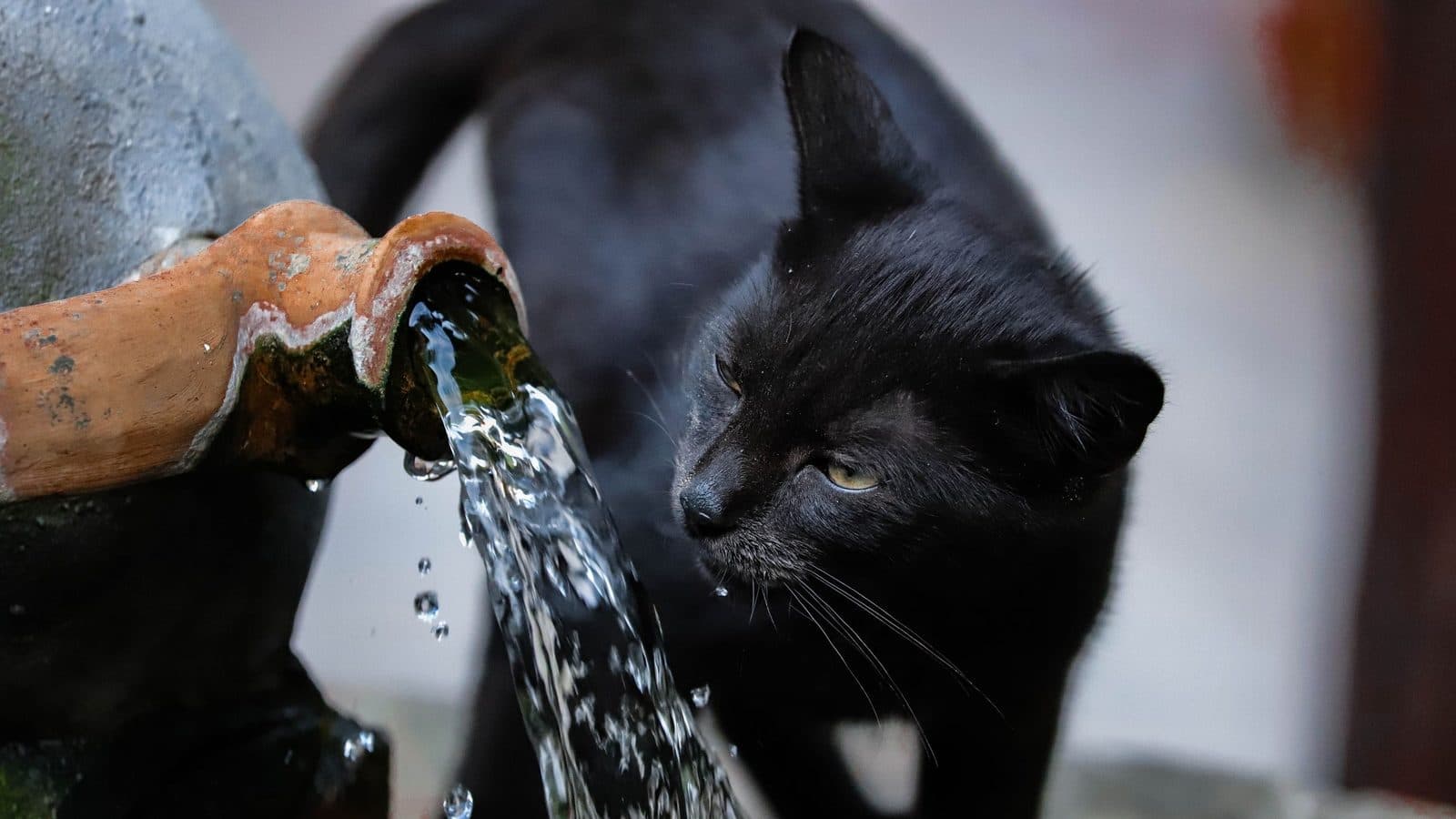
Cats are famously bad drinkers. They evolved in dry places and got most of their water from prey, and a healthy cat on wet food may barely visit the bowl. So when a cat starts drinking noticeably more, sitting at the tap, hopping into the bath after you shower, drinking from your glass, hanging over the bowl for a long time, it is one of the most useful early signs an owner can notice. It is also one of the few cat symptoms where waiting "to see if it passes" costs something.
First, is it really more?
"More" is hard to judge by eye, because a cat drinking at the bowl for a minute looks the same whether they drank a spoonful or a cupful. The vet's threshold is roughly more than 50 ml per kilo of body weight per day, so around 200 ml for a 4 kg cat. Above that, and especially if it is new, it is called polydipsia and it counts as a symptom.
The only way to know is to measure for two or three days:
- Use one water source. Pick up the others, or note them too.
- Fill the bowl from a measuring jug in the morning, note the amount.
- Top up during the day from the jug, noting each top-up.
- Measure what is left the next morning.
Subtract, and allow a little for evaporation. Write the daily total down, in a notebook or in the notes on the cat's profile in mypet care, so you have a number to give the vet rather than "quite a lot, I think". If the cat eats wet food, or has switched from wet to dry, say so, because a cat on dry food drinks far more from the bowl and that alone can explain a change.
Two things to rule out before you worry: a change to dry food, and hot weather, both of which raise drinking legitimately. If neither applies and the number is high, book the appointment.
The four causes behind most of it
In a cat, new thirst is not usually about the water at all. It is the body trying to flush something out, or a hormone telling it to. Four conditions account for the great majority of cases, and three of them are diseases of older cats.
1. Chronic kidney disease
The most common serious illness in cats over ten. Failing kidneys can no longer concentrate urine, so the cat loses water, gets thirsty, drinks more, and produces large, pale, wet clumps in the litter tray. Other early signs are weight loss, a dull coat, occasional vomiting and being a bit off their food. Diagnosed with a blood test and a urine sample. It cannot be reversed, but caught early it can be managed for years with diet and, later, medication and fluids. The earlier the better, which is the whole point of this article.
2. Diabetes
More common than most owners expect, especially in overweight, indoor, middle-aged cats. Sugar spills into the urine and drags water with it, so the cat drinks and pees more, is often hungry and yet losing weight, and may walk with a strange flat-footed gait on the back legs. Diagnosed with blood and urine tests. Treatable with insulin injections, which are far less dramatic than they sound, and a good number of cats go into remission on the right diet if it is caught early.
3. Hyperthyroidism
An overactive thyroid, almost always in cats over eight. The cat becomes ravenous, restless, vocal at night, and loses weight while eating like a horse. Thirst is part of the picture. The vet can often feel the enlarged gland in the neck, and a single blood test confirms it. Very treatable: daily tablets, a special diet, or a one-off radioactive iodine treatment that cures it outright.
4. Urinary or kidney infection, or a womb infection
Less common, but the one that can turn into an emergency. An infection in the urinary tract or kidneys raises thirst and often comes with straining, frequent small pees, blood in the urine or crying in the tray. In an unspayed female, a womb infection (pyometra) causes thirst, lethargy and a swollen belly and needs surgery the same day. If thirst comes with any of these, do not wait for a routine slot.
There are rarer causes, some liver diseases, certain medications such as steroids, and a few hormonal conditions, but the vet will get to those after ruling out the four above.
What the vet will do
Almost always the same thing, and it is worth knowing in advance so it does not feel like an upsell:
- A full examination, including feeling the kidneys and the thyroid and checking the weight against last time. This is where a weight history on the cat's profile earns its keep, because a 200 g loss in a 4 kg cat is five percent and easy to miss by eye.
- A blood panel, which checks kidney values, blood sugar and thyroid hormone in one go.
- A urine sample, which tells the vet how concentrated the urine is and whether there is sugar, protein or infection in it. If you can bring one, do: ask the clinic for non-absorbing litter, or catch some with a clean ladle from a freshly cleaned tray.
Expect to pay for the tests rather than just the consultation. It is the tests that give the answer, and there is no way round them.
Why a week matters
With most cat symptoms, watching for a few days is reasonable. Thirst is different because of what is behind it. A diabetic cat left untreated can go into ketoacidosis, which is a genuine emergency. Kidney disease is measured in how much function remains, and every month of untreated high blood pressure and high phosphate takes some of it. An overactive thyroid quietly damages the heart. None of these gets better by itself, and all of them are easier to manage the earlier they are found.
So the rule is simple. If the number from the jug is high and there is no innocent explanation, book the vet this week, not next month. And whatever the answer, keep measuring. A cat with a chronic condition will be checked every few months, and the daily drinking figure is one of the best at-home ways to see whether the treatment is working.
What to write down before you go
Take these with you, on paper or on your phone:
- Daily water intake, measured, for two or three days.
- Current food, and whether it changed recently.
- The cat's weight now and any earlier weights you have.
- What the litter tray looks like: bigger clumps, more of them, any blood.
- Appetite: more, less, or the same.
- Anything else new: vomiting, night-time yowling, a change in the coat.
Ten minutes of notes turns a vague worry into a diagnosis in one visit, and in a cat, that visit is the one that matters.