The vaccination schedule, explained once: why a puppy or kitten needs more than one injection
Three injections for a puppy, then one more at six months. It is not the vet being cautious. Why the early ones can fail, why the one at 16 weeks matters most, what every dog and cat needs, how often adults need boosters, and when a puppy can go out.
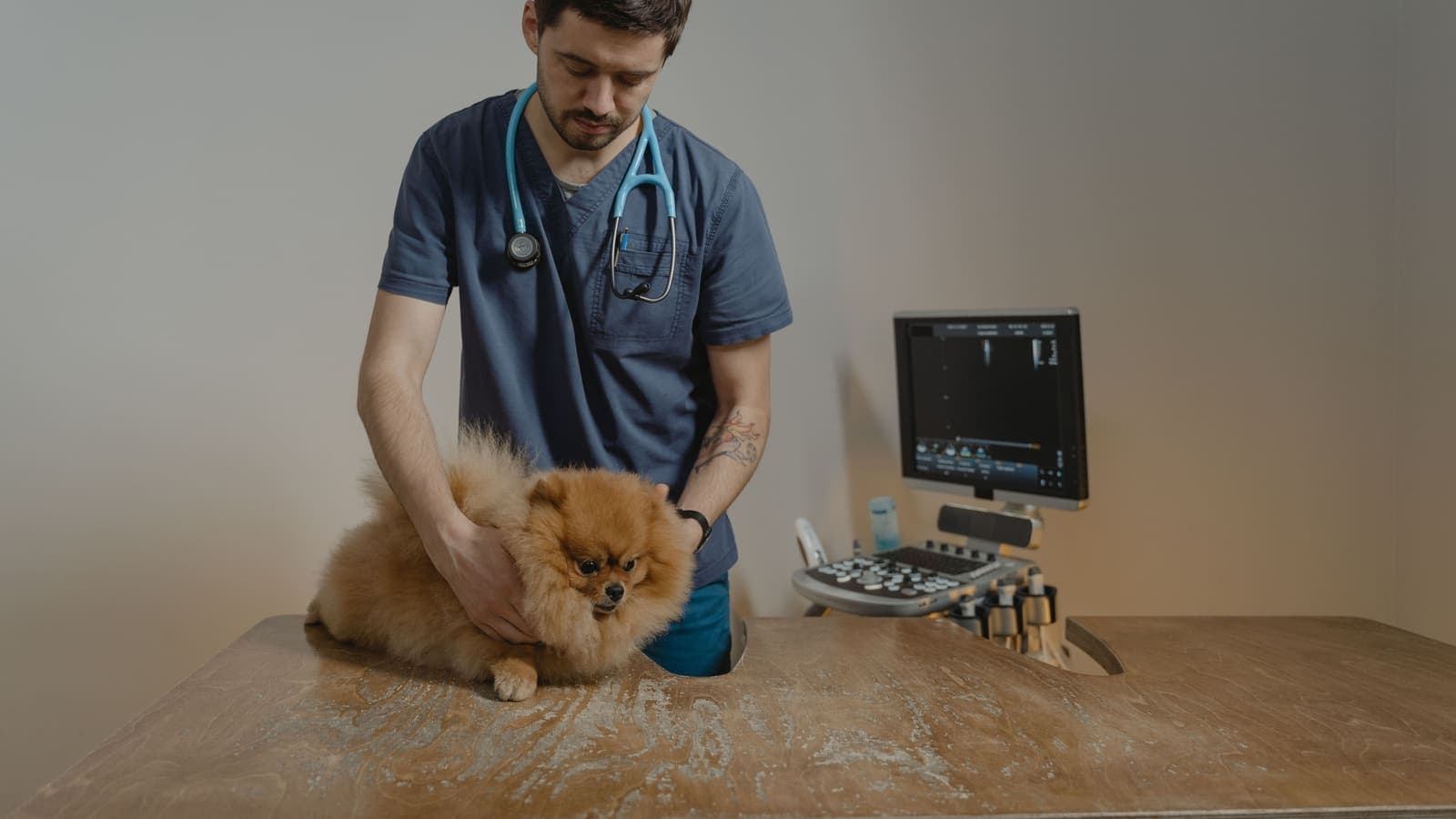
The puppy is nine weeks old and has just had his first injection. The vet says come back in three weeks. Then again three or four weeks after that. Then, it turns out, once more at six months. Four visits for the same few diseases sounds like a lot, and it is natural to wonder whether the vet is being overcautious, or simply keeping the calendar full.
Neither. The reason is the mother's milk, and once you know it, the whole schedule makes sense.
Why one injection is not enough
In the first hours of life, puppies and kittens drink their mother's first milk, and with it her antibodies. Those borrowed antibodies protect them through the first weeks, then fade. How fast they fade differs from one animal to the next, even between puppies of the same litter.
While they are still there, they do something unhelpful: they neutralise the vaccine too. An injection given while the mother's antibodies are high does nothing. The same injection a few weeks later, once they have faded, works. Nobody can tell from looking at a puppy which week that is.
So vets repeat the injection every two to four weeks. Each one is another attempt to catch the moment the mother's protection runs out, so that the puppy's own protection starts as soon as possible. The time between the two, when the puppy is protected by neither, is called the window of susceptibility. More frequent injections make it shorter, though not more often than every two weeks.
The injection that matters most is the one at 16 weeks or older. By then the mother's antibodies have faded in the large majority of puppies and kittens, so almost all of them respond. A course that ends at ten or twelve weeks may never have worked, even though the booklet is full of stamps. The international guidelines of the World Small Animal Veterinary Association (WSAVA), updated in 2024, are firm on this: the last injection of the course at 16 weeks of age or older.
And the one at six months? In a few animals the mother's antibodies are still there even at 16 weeks. Rather than leave them unprotected until their first birthday, the 2024 guidelines advise one more dose at 26 weeks or later. Instead of that dose, your vet can do a blood test from 20 weeks of age to see whether the course has worked.
A typical first year, then:
| Age | What happens |
|---|---|
| 6–8 weeks | First injection of the core vaccines |
| Every 2–4 weeks | The same again |
| From 12 weeks | Rabies, as your country's law and the vaccine require |
| 16 weeks or older | The last of the course, and the one that counts most |
| 26 weeks or older | One more core dose (or a blood test instead) |
| About 1 year | A full health check |
What every dog and cat should have
The guidelines call these core: the vaccines every animal should get, wherever it lives.
- Dogs: distemper, infectious hepatitis (canine adenovirus) and parvovirus. Usually one combined injection.
- Cats: panleukopenia (feline parvovirus), and the two viruses behind cat flu, herpesvirus and calicivirus.
- Both: rabies, wherever the disease exists or the law requires it. It is also the vaccine every border asks about, with dates that are less forgiving than people expect; we wrote about the travel rules that catch people out.
Two more are now core in many places:
- Leptospirosis, for dogs. New in the 2024 guidelines: wherever the disease is common in dogs and suitable vaccines exist, every dog should be vaccinated. Dogs pick it up from water and wet ground contaminated with the urine of infected animals, rats among them, and people can catch it too. It takes two injections to start and then one every year.
- Feline leukaemia (FeLV), for cats, where the virus is common: all kittens under a year, and adult cats that go outdoors or live with cats that do.
Everything else depends on how your pet lives. The best known is the kennel cough vaccine, for dogs that board, go to day care or meet many other dogs; many kennels require it. It does not stop a dog catching kennel cough, but it makes the illness milder, and it is given every year. Along the Mediterranean, ask about leishmaniasis too: there is a vaccine for dogs, though keeping sandflies off comes first (more here).
Adults need fewer injections than you might think
Once the first year is done, the core vaccines protect for years. The 2024 guidelines advise giving them no more often than every three years to adult dogs and to cats that live quietly indoors.
What is given yearly is the rest: leptospirosis, kennel cough, and, for cats that go to a cattery or meet other cats, the cat flu vaccines. So "the yearly vaccination" is really a yearly health check at which some vaccines are due and others are not. The guidelines ask vets to call it that, because the check is worth more than the injection: teeth, weight, heart, lumps, the questions you have been saving up.
Two things to know:
- A yearly vaccine that lapses starts again. If the leptospirosis vaccine has been missed for a long time, the course restarts with two injections, two to four weeks apart.
- An adult with no history (a rescue, a stray you took in) does not need the whole puppy course. For a dog, a single dose of the core vaccine usually does it; for a cat, two doses, two to four weeks apart.
Can the puppy go outside?
This is the question owners actually ask, and two risks pull in opposite directions. Parvovirus is hardy and lingers where infected dogs have been. But the first three months or so are also when a puppy learns that people, traffic, other dogs and strange floors are nothing to fear. A puppy kept indoors until the course is finished misses most of that, and fear learned young is hard to undo. The American Veterinary Society of Animal Behavior puts it plainly: socialisation should begin before vaccination is complete.
The middle way, which the WSAVA guidelines also describe:
- No places where unknown dogs go: parks, the pavement outside the vet, the floor of the pet shop.
- Do meet healthy puppies and fully vaccinated adult dogs you know, at home or in their garden.
- Carry the puppy to see the world: the market, the bus stop, children on their way home from school.
- Puppy classes are fine when they ask for at least one vaccination and keep their floors clean. In one American study, 279 vaccinated puppies went to such classes and not one of them caught parvovirus.
Kittens have it easier. They stay indoors until the course is done, and their socialisation happens at home.
After the injection
A sore spot, a quiet evening, less appetite and a slight temperature for a day are common and pass by themselves.
Phone the vet straight away if the face swells, hives appear, your pet vomits more than once, has trouble breathing or collapses. Such reactions usually start within minutes to a few hours of the injection. They are uncommon, and quick help works.
In cats, a small lump where the injection went is common and usually goes down within weeks. Vets follow a simple rule, often called 3-2-1: go back if the lump is still there after three months, is bigger than two centimetres, or is still growing one month after the injection. Very rarely, a tumour grows where an injection was given, which is why many vets now inject cats lower on a leg rather than between the shoulders, where a growth would be hard to remove.
Keep the dates
Every vaccination comes with a name, a sticker from the vial, a date and a date for the next one. The booklet or passport is the record your vet and every border will ask for, so keep it safe and keep it with you on trips. And note the next date somewhere that will remind you: it is the second injection, and the booster at six months, that people forget. The vaccination card in mypet care holds the dates and reminds you when the next one is due.
Sources
- Squires RA, Crawford C, Marcondes M, Whitley N. 2024 guidelines for the vaccination of dogs and cats, compiled by the Vaccination Guidelines Group (VGG) of the World Small Animal Veterinary Association (WSAVA). Journal of Small Animal Practice, 2024. doi:10.1111/jsap.13718
- Stone AE, Brummet GO, Carozza EM, et al. 2020 AAHA/AAFP Feline Vaccination Guidelines. Journal of Feline Medicine and Surgery 2020;22(9):813–830. doi:10.1177/1098612X20941784
- Hartmann K, Day MJ, Thiry E, et al. Feline injection-site sarcoma: ABCD guidelines on prevention and management. Journal of Feline Medicine and Surgery 2015;17(7):606–613. doi:10.1177/1098612X15588451
- Stepita ME, Bain MJ, Kass PH. Frequency of CPV infection in vaccinated puppies that attended puppy socialization classes. Journal of the American Animal Hospital Association 2013;49(2):95–100. doi:10.5326/JAAHA-MS-5825
- American Veterinary Society of Animal Behavior. Position statement on puppy socialization. avsab.org
This article explains the general guidelines; your vet knows your pet and which diseases are common where you live, and the schedule they set is the one to follow.