Reactive on walks: lunging at other dogs is usually fear, and here is what works
A dog that explodes at other dogs on the lead is not aggressive, dominant or badly trained. Nine times in ten it is scared and has learned that noise makes the scary thing go away. What reactivity is, the three mistakes that make it worse, and the method that actually changes it.
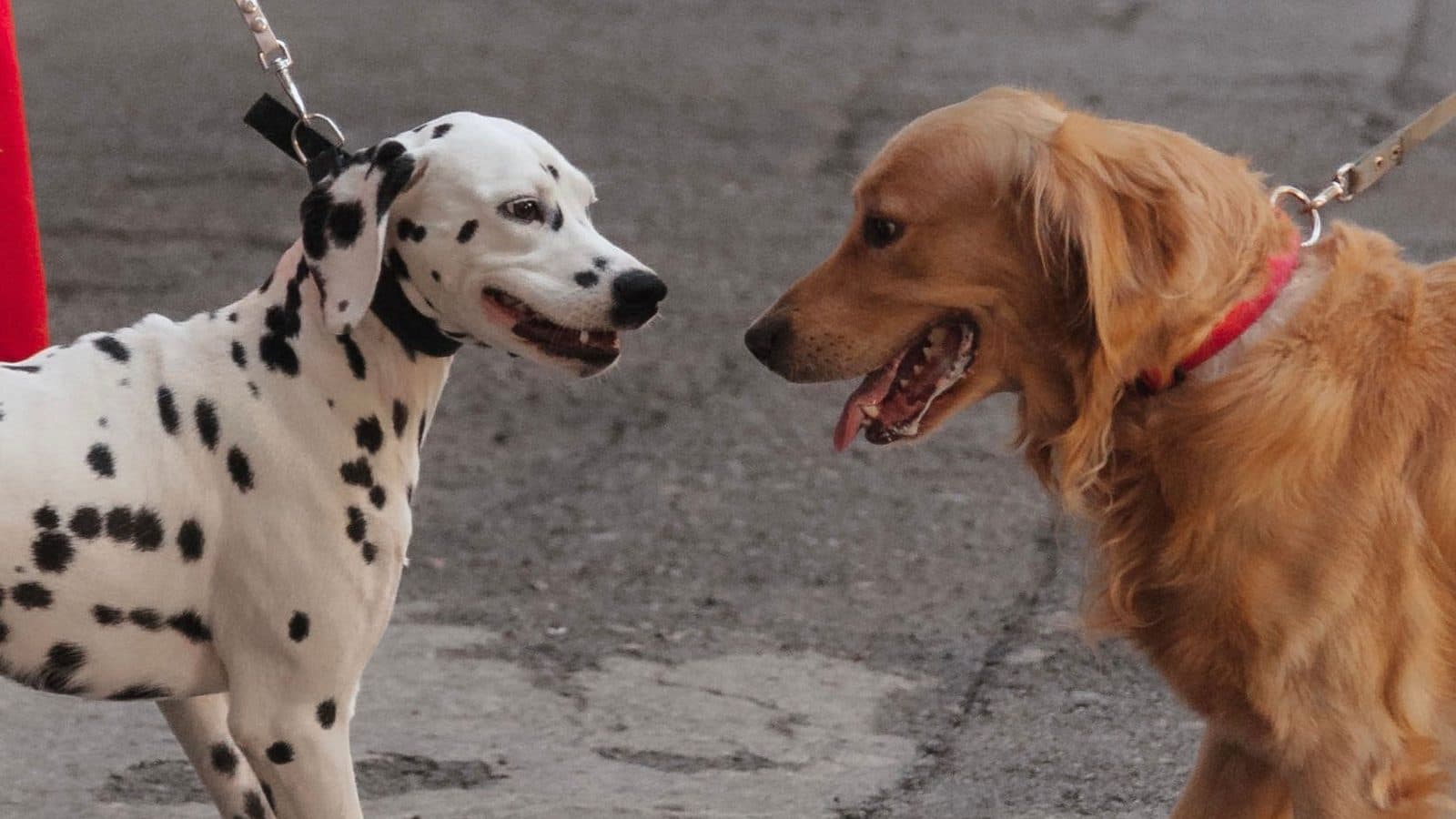
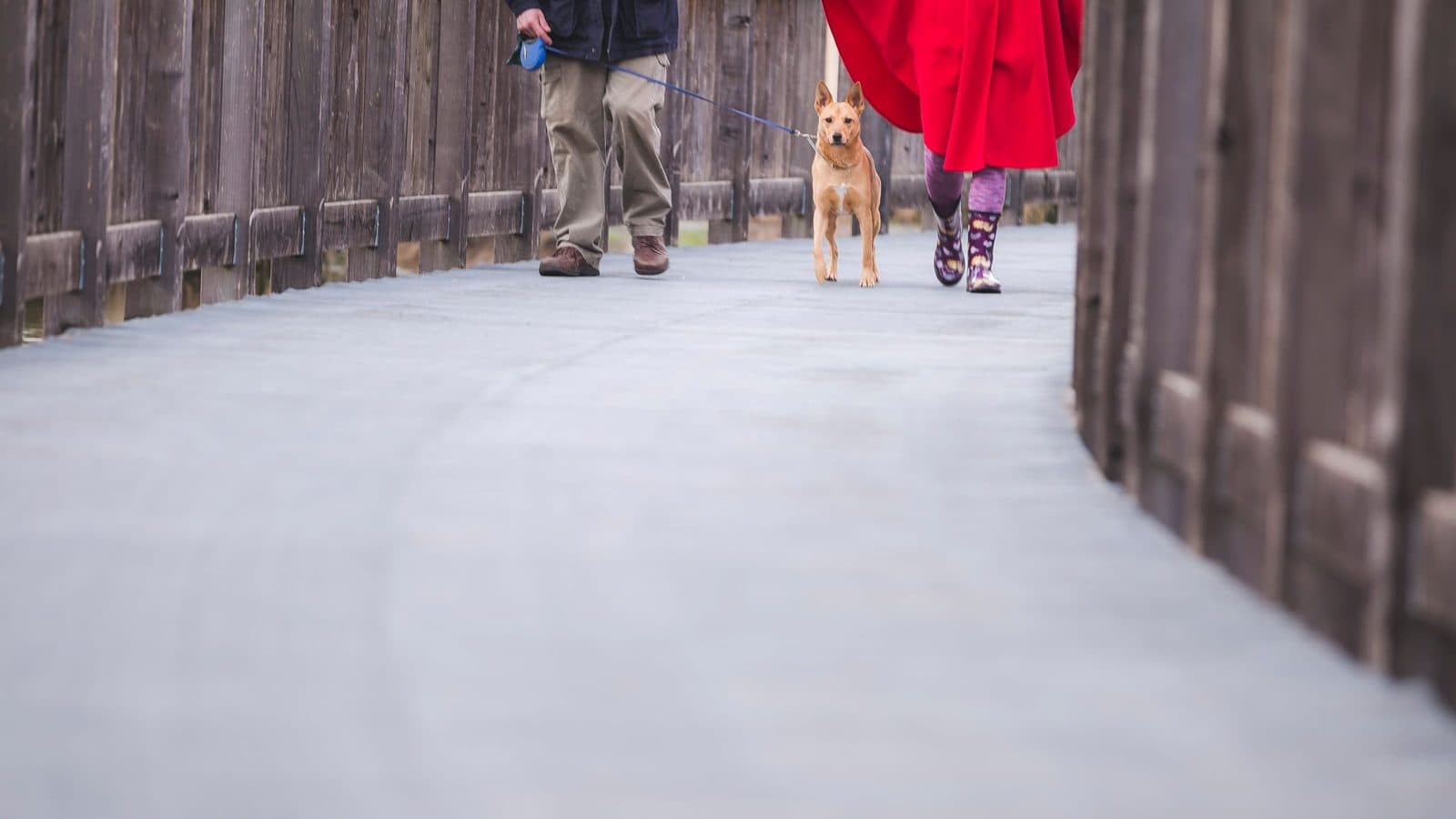
You know the walk. You see the other dog before yours does, and your stomach drops. You tighten the lead, try to steer round a parked car, and then it happens anyway: barking, lunging, spinning, teeth, a dog that looks nothing like the one asleep on your sofa an hour ago. The other owner gives you a look. You apologise to nobody in particular and go home early.
This is reactivity, and it has become the single most common reason people call a trainer. It is also badly misunderstood, which is why so much of the advice you get, from the other owner, from the internet, from a relative, makes it worse.
What is actually happening
A reactive dog is a dog that has an outsized response to something ordinary: another dog, a cyclist, a man in a hat, a child running. The response looks like aggression. In most cases it is not.
It is fear, and it works. The dog sees another dog, feels trapped because it is on a lead and cannot get away, and does the only thing left: makes a lot of noise to make the other dog leave. And the other dog does leave, because it was walking past anyway. From the dog's point of view the barking succeeded. Next time it barks sooner and louder. That is the whole loop, and it explains why reactivity gets worse on its own and almost never better.
A smaller group of reactive dogs is frustrated rather than scared: they desperately want to greet and cannot, and the lead turns excitement into noise. The training is similar, and you do not have to be sure which one you have to start.
What it is almost never is dominance, or "protecting you", or a bad dog. It is a dog over its threshold, and a dog over its threshold cannot learn anything, which is the key to everything that follows.
The three mistakes that make it worse
Correcting the dog. A jerk on the lead, a shout, a spray, a prong or shock collar. This is the most common advice and the most harmful. The dog sees another dog and something unpleasant happens to it. It does not learn "stop barking"; it learns "other dogs mean pain", which is exactly the belief that was causing the barking. Every serious behaviour body in Europe says the same, and the research behind them is consistent: punishment increases fear-based aggression.
Forcing the greeting. "He just needs to meet more dogs." Walking a scared dog straight up to another dog is like treating a fear of spiders by putting one in someone's hand. Flooding sometimes produces a dog that shuts down and looks calm; it does not produce a dog that is calm.
Tightening the lead. You cannot help it, and the dog feels it. The tension travels down the lead and confirms that something is about to happen. Half the work for the owner is learning to keep the lead loose and breathe when every instinct says grip.
The method: distance, then food, then time
The whole approach fits in one sentence: keep the dog far enough away that it can notice the other dog without reacting, and make that moment pay. Trainers call it counter-conditioning and desensitisation. It is slow, it is not glamorous, and it is what works.
1. Find the threshold. Every reactive dog has a distance at which it can see another dog and still eat, look at you, and think. Thirty metres, fifty, the other side of a football pitch. That distance is your starting line. Closer than that and no learning happens, only rehearsal of the problem.
2. Pair the trigger with something good. Dog appears in the distance. The instant your dog notices it, and before it reacts, you say a quiet marker word ("yes") and feed something excellent: chicken, cheese, liver. Dog disappears, food stops. Repeat, many times, over weeks. You are changing what the sight of a dog predicts, from "trouble" to "chicken".
3. Reward looking back at you. Very soon the dog will glance at the other dog and then at you, because you are where the food is. That glance is the behaviour you want for the rest of the dog's life. Pay it every time.
4. Close the distance slowly. Over weeks, not days. Five metres closer when the dog is relaxed at the current distance. If it reacts, you went too fast; add distance and carry on. A reaction is information, not failure.
5. Manage everything else. For now, avoid what you cannot train. Walk at quiet times, choose wide streets, cross the road early, use parked cars as screens, turn round without drama. Every full-blown reaction sets the work back, so the fewer the better.
Most dogs show clear change in four to eight weeks of consistent work and a different dog in three to six months. Some remain a bit sensitive for life, and manageable is a perfectly good outcome.
The emergency move
You will get caught out: a dog round a corner, off-lead, coming straight at you. For that you need one practised move, taught at home first.
Say a cheerful "let's go", turn 180 degrees, and walk briskly away, feeding as you go. That is it. Practise it in the garden and on quiet streets until the dog whips round at the words. It is not training the fear away, it is getting out of a situation that would undo a week's work, and it saves the day more often than anything else.
Equipment and help
A front-clip harness or, for a large strong dog, a well-introduced head collar, so a lunge does not pull you over. A two-metre lead, not a retractable. A treat pouch on your belt, because you cannot do this with food in a pocket. A muzzle, trained gently with food over a few weeks, if the dog has ever made contact; a muzzled dog can go more places and its owner relaxes, which the dog feels.
Get a professional if the dog has bitten, if you are frightened of it, or if six weeks of the method above has changed nothing. Look for a behaviourist or trainer who uses reward-based methods and will say so; in Europe, membership of a body such as the APDT, IMDT, PPG or a national equivalent is a reasonable filter. Anyone offering a fix in one session, or a collar as the answer, is selling the mistakes above.
And talk to your vet. Pain is behind a surprising number of "sudden" reactivity cases, particularly in dogs over seven: a sore hip makes every approaching dog a threat. A check-up costs a consultation; a year of training a dog that hurts costs a great deal more.
Keep a record
Reactivity improves in a way that is hard to see day to day and obvious month to month. Note each walk briefly: the distance you worked at, how many reactions, anything that went well. A line in the dog's notes in mypet care is enough. In eight weeks you will read "reacted at 40 m, three times" and realise you are now working at fifteen metres with none, which on a bad Tuesday is the thing that keeps you going.
The dog on the end of the lead is not being difficult. It is frightened, and it has found a strategy that works. Your job is to give it a better one, at a distance where it can hear you.