Treats are the diet you don't count
Most overweight pets are not overfed at mealtimes. They are overfed between them, by four different people, a little at a time. What a treat actually weighs in calories, the 10% rule vets use, and a way to keep giving treats without the slow weight gain.
Ask an owner what their dog eats and you get a careful answer: the brand, the amount, morning and evening. Ask what else the dog ate today and you get a pause. A dental stick. The crust of the toast. Something from the training pouch. Whatever the children dropped. The bit of cheese that hides the tablet. A biscuit from the neighbour, who loves him.
None of it felt like feeding. All of it was food. More than half of European dogs and cats are now overweight, and in most of those households the bowl is measured correctly. The weight comes from the part nobody counts.
What a treat actually is, in calories
The reason treats go unnoticed is that they are small in your hand and large in the animal. A few real numbers:
- A 10 kg dog needs roughly 550–600 kcal a day. A 4 kg cat needs about 200.
- One large dental stick: 70–100 kcal. For that 10 kg dog, that is a sixth of the day, the equivalent of you eating a full extra meal.
- A cube of cheese the size of a dice: 25–30 kcal. Three of those to hide tablets and you have fed a cat 40% of its day.
- A slice of ham: 30–40 kcal. A tablespoon of peanut butter: 95.
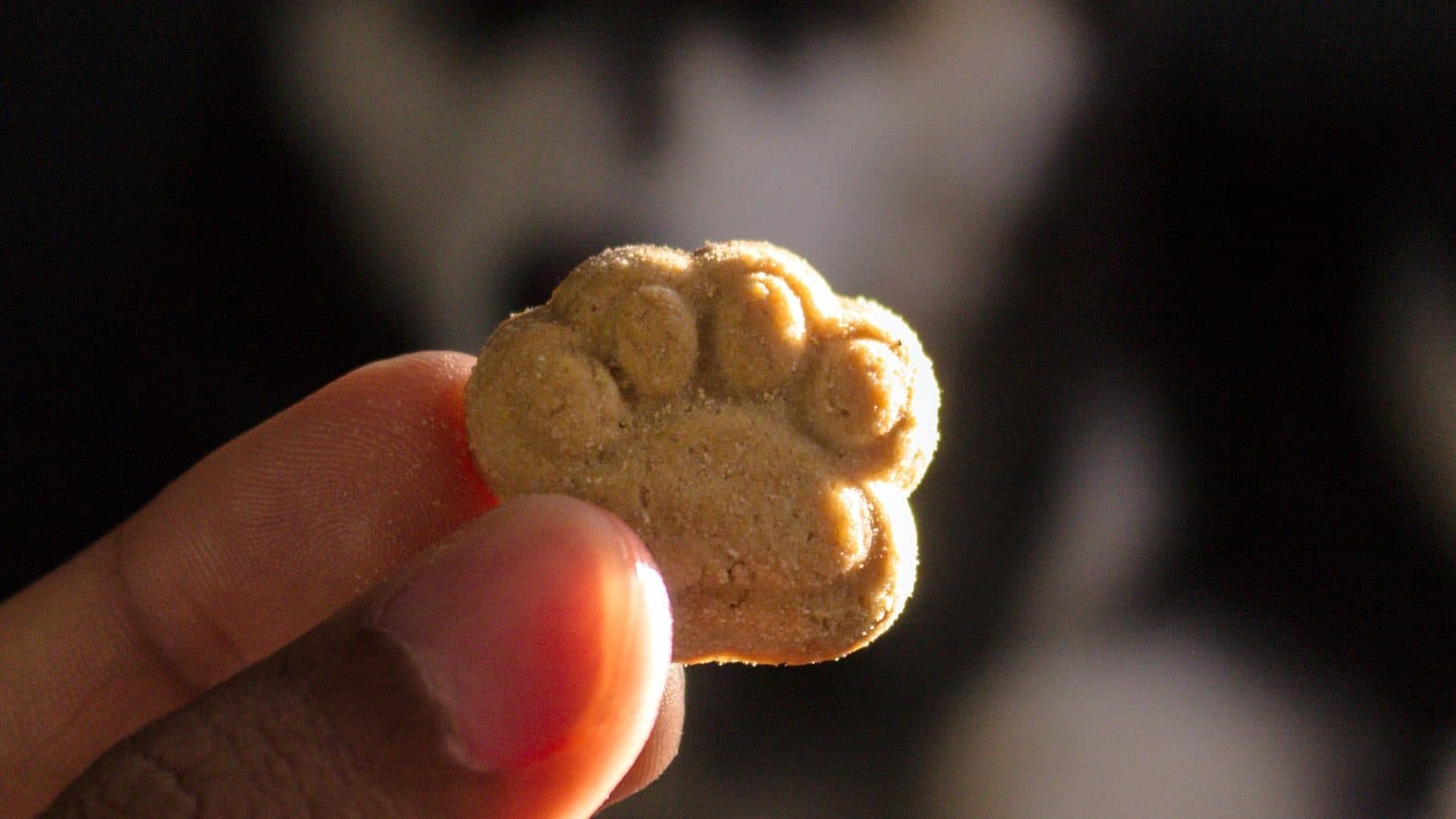
- A typical commercial biscuit treat: 15–40 kcal each. The packet suggests "up to five a day".
- One pig's ear: 130–200 kcal, a third of the day for a small dog.
- A teaspoon of tuna in oil for the cat: 15 kcal, which sounds like nothing and is nearly a tenth of the cat's day.
Scale matters in a way we are bad at feeling. A biscuit to a 5 kg dog is what a whole sandwich is to you. Nobody gives their dog five sandwiches a day on purpose.
The 10% rule
Vets and nutritionists use one simple rule: treats, chews, table scraps and everything else that is not the main diet should add up to no more than 10% of the day's calories. For the 10 kg dog that is about 55 kcal, less than one dental stick. For the cat it is 20 kcal, which is roughly ten of the small crunchy treats, not the quarter of a packet cats are very good at asking for.
There is a second reason for the rule beyond weight. Complete pet foods are balanced; treats are not. Once treats pass about a tenth of the diet they start to unbalance it, which matters most for growing animals and for pets on a prescription food, where the treats can quietly cancel the diet's whole purpose.
And the part most people miss: if you feed treats, the bowl has to shrink by the same amount. Treats are not on top of the ration. They are part of it.
Why counting is the whole fix
Nobody decides to overfeed. It happens because a household is several people, each giving "just one", and none of them can see the total. The dog, reasonably, asks each of them separately.
So the fix is not willpower. It is making the total visible:
1. Count for one ordinary week. Every treat, chew and scrap, from everyone, written down. This is what the treat tracker in mypet care is for: each person in the household logs what they gave on the pet's shared profile, and the day's total shows itself. Most families are genuinely surprised by the number, and the surprise does most of the work.
2. Set the daily allowance in the morning. Put the day's treats in a small jar or cup. When it is empty, that is the day. Everybody takes from the same jar, which turns an invisible total into a visible one. Take the day's training treats out of the measured meal rather than adding to it: kibble from the bowl works perfectly well as a reward for most dogs.
3. Make them smaller. A dog does not count size, it counts events. A biscuit broken into four is four rewards. Training treats should be the size of a pea, even for a big dog. This one change often halves treat calories with no protest at all.
4. Swap what you can. For dogs: carrot, cucumber, green beans, a slice of apple without pips, a few blueberries. All are 2–5 kcal a piece, and a surprising number of dogs love them, particularly cold from the fridge. For cats, who are strict carnivores and rarely interested in vegetables: a little plain cooked chicken or white fish, or a few pieces of their own dry food delivered with ceremony. Never grapes, raisins, onion, chocolate, macadamias or anything sweetened with xylitol.
5. Replace the treat with what it stands for. Much treat-giving is affection, guilt at leaving, or a way to stop the staring. A two-minute game, a scatter of the dog's own kibble in the grass, a brush, a short training session: these answer the same request. The pet wanted the attention more than the biscuit.
The people you cannot control
Grandparents, neighbours, the kind man at the café. You will not stop them and you should not try, because it is love. Give them the jar. "He can have anything from this pot" works where "please don't feed him" never has. It is also worth telling them, plainly, the biscuit-to-sandwich arithmetic; most people simply have no idea.
Tablets are the other leak. If a pet needs daily medication hidden in food, count that food: use the smallest amount that works, choose a lower-calorie wrap (a bit of the pet's own wet food often does it), and take the equivalent off dinner.
How to know it is working
Weigh monthly, the same way each time, and write it down. For a small dog or a cat, stand on the bathroom scale holding them and subtract yourself. Learn the body-condition check from our piece on whether your pet is overweight: you should feel the ribs easily under a thin cover, and see a waist from above.
A sensible loss is 1–2% of body weight a week for a dog and no more than 1% for a cat, and a cat's diet should always be planned with a vet, since cats that lose weight too fast can become seriously ill. If a month of honest counting and a smaller bowl changes nothing, that is also a reason for a vet visit: an underactive thyroid in dogs, and several other conditions, make weight stick.
Treats are not the enemy. They are training, bonding and one of the real pleasures of living with an animal. They just need what the bowl already has: a number.