Guinea pigs: the vitamin they cannot make, the friend they need, and the sign that means the vet today
Guinea pigs are sold as an easy first pet and kept, far too often, in ways that quietly harm them. Why they need vitamin C every day, why one alone is a welfare problem, the diet that keeps teeth and guts working, the heat that kills them in summer, and the one sign that never waits until morning.
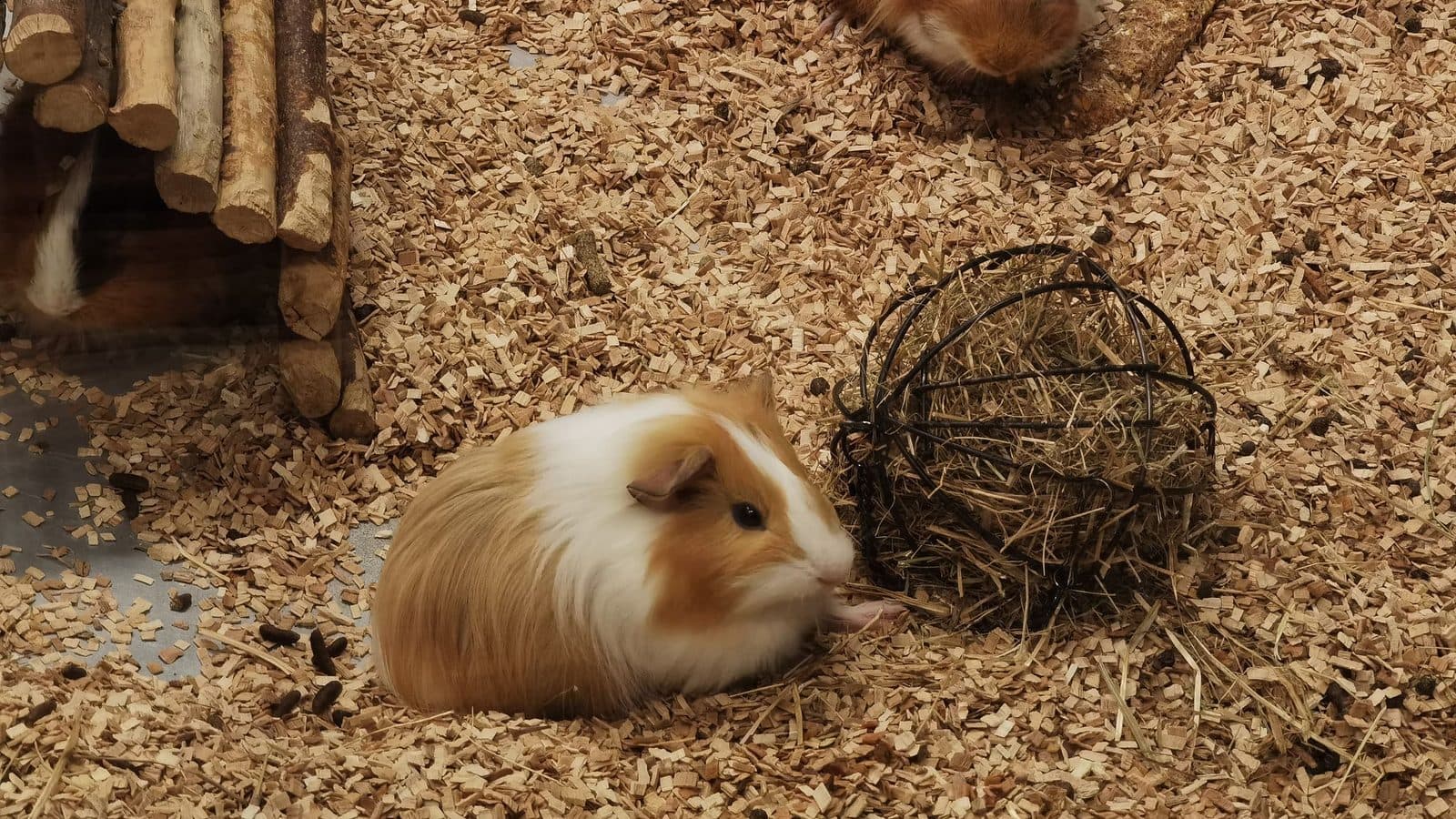
A guinea pig is small, gentle, talkative and long-lived for its size: five to eight years, sometimes more. It is also an animal whose needs are specific in ways that a rabbit's or a hamster's are not, and a great deal of guinea pig illness is the result of being kept as if it were one of those. Three things in particular.
The vitamin they cannot make
Guinea pigs share a quirk with humans and almost no other pet: their bodies cannot make vitamin C. Everything they need has to come in with the food, every day, and it runs out fast. A guinea pig short of it develops scurvy within weeks: a rough coat, sore and swollen joints, a reluctance to move, bleeding gums, wounds that do not heal, and a general wretchedness that is easily mistaken for old age or a bad temper.
An adult needs roughly 10–30 mg a day, more when ill, pregnant or growing. Where it comes from matters:
- Fresh vegetables daily, and the right ones: a bell pepper is the single best source, followed by leafy greens such as coriander, parsley, rocket, kale in moderation, and dandelion. A cup of mixed veg a day per pig, with pepper in it most days, covers it.
- A guinea pig pellet, not a rabbit one. Rabbit pellets contain no added vitamin C and some contain antibiotics that are toxic to guinea pigs. Even guinea pig pellets lose most of their vitamin C within a few months of manufacture, so buy small bags and check the date.
- Not the water. Vitamin C drops added to the water bottle degrade within hours, make the water taste odd so the pig drinks less, and are the commonest way owners believe they have covered it when they have not. If a supplement is needed, a tablet or a measured liquid given directly is the way.
The friend they need
Guinea pigs are herd animals in the wild and remain so in a hutch. A single guinea pig is a stressed guinea pig, quieter, more nervous, and statistically shorter-lived. Switzerland has made it illegal to keep one alone; the veterinary bodies in the rest of Europe say the same without the law behind it.
Keep at least two: two females, two neutered males, or a neutered male with one or more females. Two entire males raised together usually manage if the space is generous; two strangers put together as adults may not. Introductions are done on neutral ground, and the pigs will sort out who is in charge with a certain amount of chattering and rumbling that sounds worse than it is. Fur flying and blood are the point to separate.
A rabbit is not a companion for a guinea pig. It is larger, kicks, carries a bacterium that gives guinea pigs pneumonia, and eats a different diet. The two used to be sold together; they should not be kept together.
The diet that keeps teeth and guts working
A guinea pig's teeth grow continuously and its gut is built to process grass all day. Both need fibre, in quantity, every hour it is awake.
- Hay, unlimited, always. Good meadow or timothy hay should be 80 % of what a guinea pig eats and should never run out. It wears the teeth, keeps the gut moving, and is what a bored guinea pig does with its afternoon. Alfalfa hay is too rich in calcium for adults and is for the young and the pregnant only.
- Vegetables daily, as above, for the vitamin C.
- A small measure of pellets, an eggcup-full per pig per day, no more. Muesli-style mixes with seeds, nuts and coloured pieces let the animal pick out the sweet bits and leave the rest, and are the fast road to bad teeth and obesity.
- Fruit as a treat, a small piece once or twice a week. Sugar upsets the gut bacteria.
- Water from a bottle, checked daily for blocked spouts, and a bowl as well in hot weather.
Never: iceberg lettuce (watery, useless and loosening), potato, onion, garlic, avocado, chocolate, dairy, bread, and anything from the rabbit shelf that is not plainly labelled for guinea pigs.
Heat, which kills them
A guinea pig cannot sweat and cannot pant efficiently. Above about 26 °C it begins to struggle; above 30 °C it can die of heatstroke within hours, and it will die quietly, lying stretched out in a corner. In Greece, Albania and across the Mediterranean, a hutch on a balcony or in a conservatory in July is a death trap, and so is a car.
Keep them indoors in summer in the coolest room, out of direct sun, with a frozen water bottle wrapped in a towel to lie against, a ceramic tile to lie on, and a fan moving the air in the room but not blowing on the cage. Wet ears, lethargy, drooling and fast shallow breathing are heatstroke: cool the animal gradually with damp towels, not cold water, and ring the vet.
Cold is less dangerous but not harmless: below about 15 °C an outdoor hutch needs insulation, deep bedding and a companion to huddle with, and below 10 °C the animals should come inside.
The sign that never waits until morning
A guinea pig that has stopped eating is an emergency. Not a "see how it is tomorrow" problem: an emergency within about twelve hours.
The reason is the gut. It is designed to be moving constantly, and when a guinea pig stops eating, for any reason, pain, a tooth, stress, a chill, the gut slows and then stops. Gas builds, the bacteria in it shift, and the animal is in a downward spiral that becomes fatal within a day or two. Vets call it gut stasis, and it kills more pet guinea pigs than any disease that starts it.
So the rule is simple. A guinea pig that has not eaten hay or veg for half a day, is producing fewer or smaller droppings, sits hunched with a puffed-up coat, or grinds its teeth, sees a vet the same day. On the way, offer hay and fresh veg, keep the animal warm and quiet, and, if the vet says so on the phone, start syringe-feeding a recovery food. Do not wait for it to "perk up". They do not.
The other things a guinea pig vet sees
- Teeth. Overgrown molars from a low-hay diet cut the tongue and cheeks and stop the animal eating. Drooling, dropping food, weight loss. A proper examination under sedation, and a hay-based diet afterwards.
- Bladder stones, common and painful: squeaking when urinating, blood in the urine, straining. Too much calcium (alfalfa, certain greens in quantity) and too little water are the usual causes.
- Skin. Mites cause frantic scratching, hair loss and even seizures; ringworm causes bald crusty patches, and passes to people. Both are easily treated by a vet and rarely by anything from the pet shop.
- Feet. Bumblefoot, sores on the pads from wire floors, wet bedding or too much weight. Solid floors, dry bedding, trimmed nails.
- Respiratory infections. Sneezing, crusty nose, laboured breathing: guinea pigs get pneumonia easily and it needs antibiotics chosen for them; several common antibiotics are fatal to guinea pigs, which is why the vet has to be one who knows the species.
Find that vet before you need one. In most European cities there are a few practices with a real interest in small mammals; the local rescue or keepers' group will know them.
The weekly minute
Weigh each pig weekly on kitchen scales and write the number down. An adult sits somewhere between 700 and 1,200 g, and a steady weight is the best evidence that the hay is being eaten and the teeth are fine. A drop of 50 g in a week, which no eye will see under all that fur, is the earliest sign of nearly everything above. While the animal is on the scales, run a hand over it for lumps, check the nails, the feet, the eyes, and that the bottom is clean.
A shared profile for the pair, with the weekly weights and a reminder for the vitamin C veg shop, is exactly what mypet care does well; guinea pigs go in under "other", and the weight chart works the same as for a dog.
The housing, briefly
Much bigger than the pet shop cages: at least 1 m × 1.5 m of floor for two, and more is better, on one level, since guinea pigs do not climb. Solid floors, deep paper or fleece bedding changed often, a hide per animal, tunnels, hay in a rack and on the floor, and daily time in a larger run. Somewhere in the house rather than a shed at the bottom of the garden: a guinea pig that is part of the household is a guinea pig whose owner notices, by lunchtime, that it did not eat breakfast. And with these animals, noticing by lunchtime is the whole thing.