A sick bird hides it until the last day: the signs, and the weekly check that catches them
Budgies, cockatiels and parrots are prey animals that look well right up until they cannot. The quiet signs of a bird that is ill, the two household dangers that kill birds fastest, why a bird should not live alone, and the sixty-second weekly check that finds trouble weeks early.
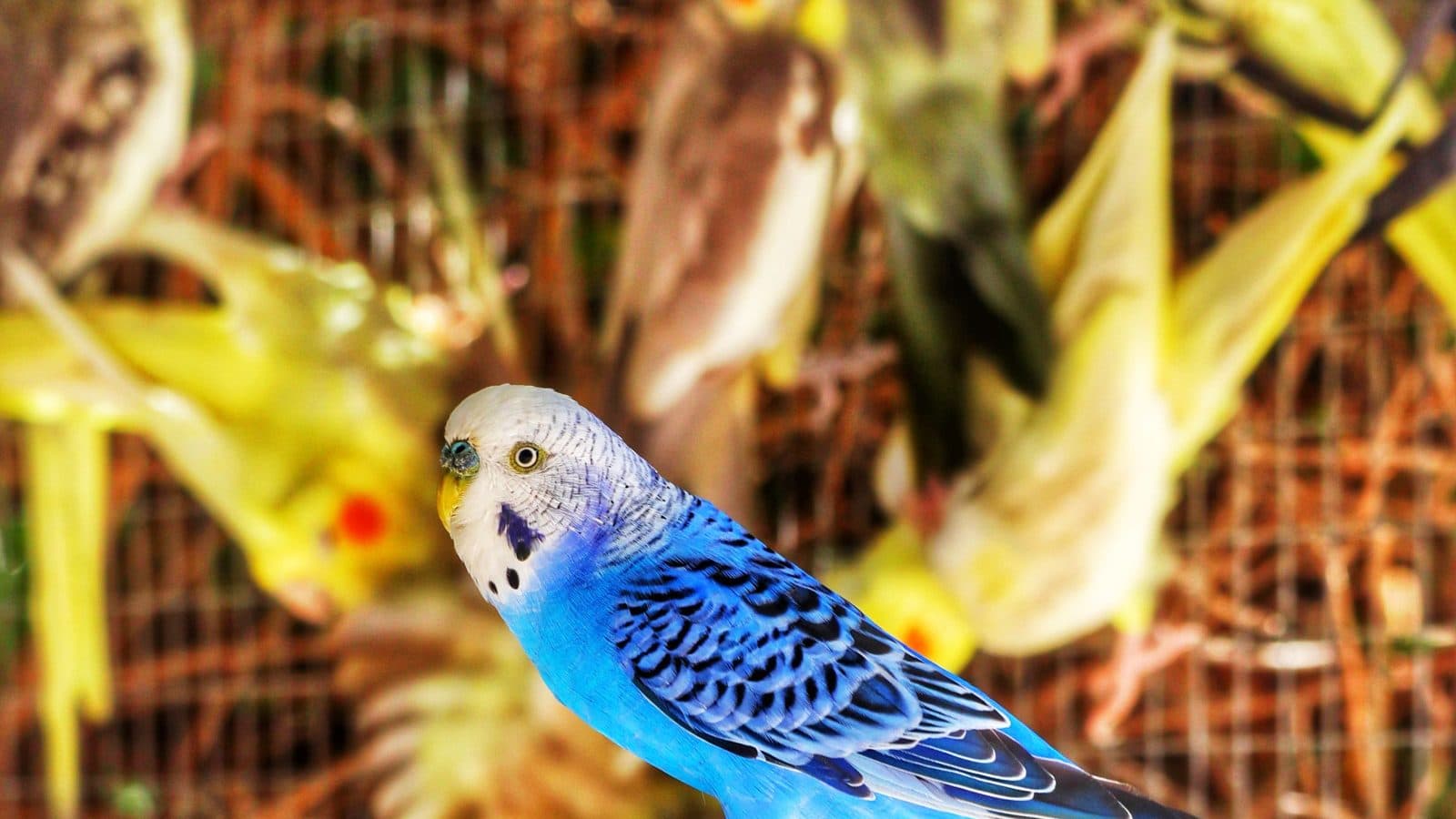
A cat that feels ill sulks. A dog tells everyone. A bird does something else entirely: it carries on looking like a bird. In the wild, the one that looks weak is the one that gets taken, so a budgie or a cockatiel with an infection will sit up straight, keep its feathers tidy and even sing, right up until it can no longer manage it. Owners describe the same thing again and again: "she was fine yesterday". She was not fine yesterday. She was fine at hiding it.
That is why bird illness so often looks sudden, and why by the time a bird looks ill it is usually seriously ill. The answer is not to worry more; it is to know the quiet signs, and to weigh the bird.
The signs a bird cannot hide
Watch a bird when it thinks nobody is looking, first thing in the morning before the household is up, and look for these:
- Fluffed up for long stretches, particularly with the eyes half closed. A bird fluffs to keep warm; a bird that stays fluffed is trying to keep warm because it is ill.
- Tail bobbing with each breath, breathing with the beak open, a clicking sound, or any change in the voice. Birds have no diaphragm, so laboured breathing shows in the tail. This is urgent.
- Sitting on the bottom of the cage, or on the lowest perch, when it used to sit high. Birds go down when they are weak.
- Sleeping more, or sleeping with both feet on the perch instead of one tucked up, or with the head not tucked back.
- Droppings that change: much more water around them, a change in colour that lasts more than a day (green or yellow urates, black or red in the droppings), or far fewer of them, or none.
- Eating differently: picking at food and dropping it, sitting at the bowl without eating, cracking seeds and leaving them, a crop that stays full for hours.
- Feathers that look wrong: dull, stained around the vent or the nostrils, plucked patches, or a bird that has stopped preening.
- Weight loss, which you will not see, because feathers hide it. A bird can lose a fifth of its body weight and look the same. Feel the keel, the bone down the middle of the chest: on a well bird it is cushioned by muscle either side; on a thin bird it stands out like a blade.
Any one of these, in a bird that is otherwise itself, is worth a closer look for a day. Two of them together, or the breathing sign on its own, means an avian vet today.
Warmth and quiet: what to do while you find a vet
A sick bird is losing the fight to stay warm. Until you reach a vet:
- move it to a small cage or a carrier in a quiet, dim room, away from other birds and from the cat;
- warm the room to 27–30 °C, or hang a heat lamp at one end of the cage so the bird can move away from it, and cover three sides of the cage;
- put food and water within reach on the floor of the cage, since a weak bird will not climb for them; offer favourites, and millet;
- do not give anything from the pet shop's medicine shelf. The "all-round tonics" and antibiotic drops sold without a prescription treat nothing reliably and lose a day.
Then the phone. An avian vet is a specialist; a good general practice will tell you honestly whether they see birds or will refer you. Find out who yours is before you need them and keep the number with the bird's profile in mypet care. A bird goes in under "bird", and the weight chart is the most useful thing on it.
The two household dangers that kill birds fastest
Both are ordinary things, both kill within hours, and both are still unknown to many owners.
Non-stick pans and anything with PTFE. When a non-stick coating is overheated, on an empty pan, a hot grill, a self-cleaning oven, some hair straighteners, irons, heat lamps and even some new ovens on their first use, it gives off fumes that are harmless to people and fatal to birds, often within an hour, with no warning beyond a bird found dead in the cage. Keep birds out of the kitchen entirely, ventilate when cooking, and retire scratched non-stick pans. Ceramic, stainless and cast iron are safe.
Avocado. Every part of the plant, including the flesh, contains a toxin that stops a bird's heart. It is the most common fatal food. Chocolate, alcohol, caffeine, onion, garlic, salty snacks and the pits and seeds of apples and stone fruit are the rest of the list to keep away from the cage.
Add to those: scented candles, aerosols, cigarette smoke, an open window with a bird loose in the room, a ceiling fan running, a toilet lid up, and a saucepan of boiling water. Bird-proofing a room is mostly about what is in the air and what is left open.
A bird should not live alone
A single budgie in a cage in a quiet room is one of the saddest things in pet-keeping, and one of the most common. Budgies, cockatiels, lovebirds and parrots are flock animals. Alone, they go one of two ways: withdrawn and silent, or attached to their owner in a way that turns into screaming and feather-plucking the moment that owner leaves the room. Both are stress, and stress is the root of most behaviour problems and a good share of the illness in pet birds.
Keep two. A pair of budgies is barely more work than one, and a bird with company is calmer, healthier and, contrary to the old advice, no less tame if you spend time with both. If a single bird is what you have, it needs hours of your company a day, not minutes, and a room where the household happens.
The cage, briefly
Bigger than you think, and wider than it is tall: birds fly across, not up. For two budgies, a cage at least 80 cm wide is a minimum, and a cockatiel needs more. Bars close enough that the head cannot go through. Perches of different thicknesses, ideally natural branches from safe trees (apple, willow, hazel), because one smooth dowel gives every bird sore feet. Something to chew every day. Out-of-cage time daily in a safe room. And a diet that is not just seed: a good pellet as the base, fresh vegetables and a little fruit daily, seed as a treat. A budgie on seed alone is a budgie heading for fatty liver disease by the age of six.
Twelve hours of dark, quiet sleep with the cage covered. Birds that live in the room with the television until midnight are chronically short of sleep, and a tired bird is a nippy, noisy, unwell bird.
The sixty-second weekly check
Here is the habit that catches illness weeks before the fluffing starts.
- Weigh the bird, on kitchen scales that read in grams, every week at the same time of day, before breakfast. Put a perch on the scales, or weigh it in a small box. A budgie weighs 30–45 g; a cockatiel 80–110 g. Write the number down.
- Look at the droppings on a clean paper liner: the dark part, the white part, and how much water. You are learning what normal looks like for this bird.
- Look at the bird: eyes clear and round, nostrils clean, beak not overgrown or flaking, feathers smooth, feet clean and gripping evenly, breathing quiet, tail still.
- Feel the keel, if the bird allows it.
A steady weight is the best evidence you can have that a bird is well. A loss of 10 % is a reason to book the vet, whatever the bird looks like; in a budgie that is four grams, which no eye would ever see. This is why the number matters, and why writing it down on the bird's profile, where the chart shows the drift, is worth more than any amount of watching from across the room.
Once a year, whether or not
An annual check with an avian vet, with a faecal test and, for an older bird, a blood test, finds the things birds hide best: the early liver disease of a seed-fed bird, the parasites, the tumours budgies are prone to after five. Ask about your country's rules on avian influenza too; during outbreaks, several EU countries require pet birds to be kept indoors and away from wild birds, and a bird that has been outside in an aviary is at risk.
A bird that hides illness is not being difficult. It is being a bird. The owner's job is to look in the places it cannot hide: the scales, the paper on the cage floor, and the first quiet minute of the morning.