Why dogs eat grass, and when it's worth a vet visit
It is the most googled dog question there is. The short answer is that most dogs do it, most are perfectly well, and the "they do it to make themselves sick" story is mostly wrong. What the research found, and the four cases where grass-eating is a symptom.
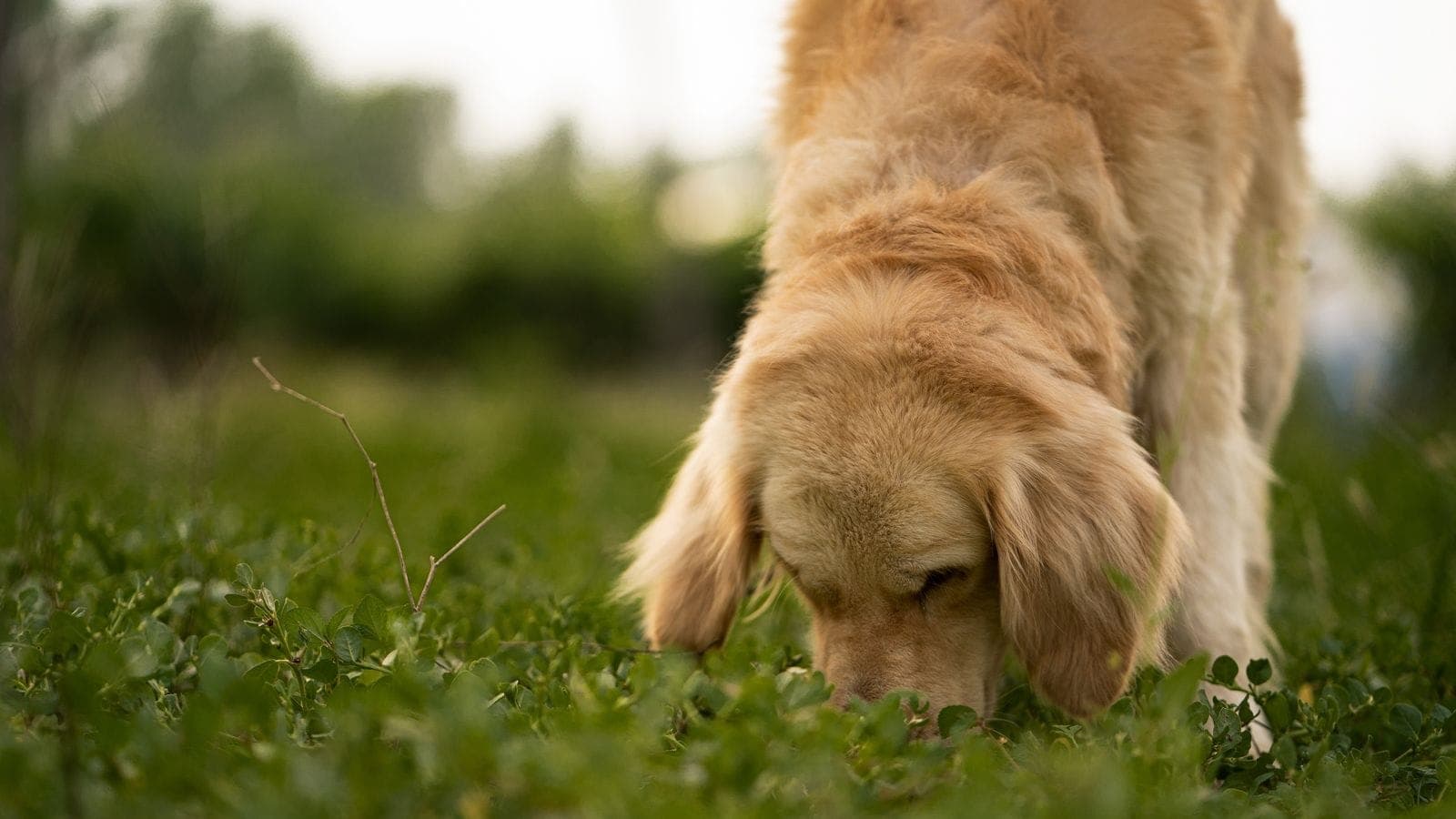
Every dog owner has watched it: the walk stops, the head goes down, and the dog grazes like a small horse. Then, sometimes, it comes back up.
"Why does my dog eat grass" is googled more than any other question about dogs — well over a million times a year. Which suggests the usual answer ("to make themselves sick") is not putting people's minds at rest. It shouldn't, because it is mostly wrong.
What the research actually found
The best study on this asked over 1,500 dog owners about their dogs' plant eating (Sueda, Hart and Cliff, University of California, Davis, 2008). What they found:
- About two thirds of dogs eat grass at least weekly. It is not a quirk of your dog. It is what dogs do.
- Fewer than one in ten looked unwell beforehand. The dog that eats grass is almost always a dog that felt fine a minute ago.
- Only about one in five vomit afterwards. Most grazing ends with nothing at all.
- Younger dogs did it more, and the dogs that ate grass had diets no worse than the ones that didn't. It is not a sign your dog is missing something.
So the picture is: a common, mostly harmless behaviour that occasionally ends in a sick-up, rather than a sick dog self-medicating. Dogs are not strict carnivores — their wild relatives eat plant matter regularly — and the simplest explanation is that grass is there, it is interesting, and some dogs like it. Boredom plays a part: a dog left standing on a lead while you talk to a neighbour will often start grazing the way you might pick at a bread basket.
When it's fine
If your dog eats a bit of grass on most walks, is otherwise itself — eating, drinking, playing, normal stools — and is occasionally sick afterwards without looking miserable before or after, that is normal dog. You do not need to stop it, and pulling the dog off every blade turns a walk into a fight.
Two sensible cautions, though:
- Know what's on the grass. Verges and parks get sprayed; lawns get treated with weedkiller and fertiliser; slug pellets are put down in gardens. The grass is fine; what's on it might not be. Keep the grazing to places you trust.
- Long wet grass and lungworm. In parts of Europe, slugs and snails on grass carry lungworm, and a dog that eats grass can swallow one without noticing. Ask your vet whether it is present where you live and whether the wormer you use covers it — many standard ones don't.
The four cases where it's a symptom
Grass-eating is worth a call to the vet when it changes, or comes with company.
- It's new and frantic. A dog that never bothered with grass and is suddenly gulping it down, sometimes with gulping and lip-licking, is often nauseous. That can be something minor it ate, or it can be the start of something in the gut. If it comes with repeated vomiting, or the dog is retching and nothing comes up, it is an emergency — see the point about bloat below.
- It's every day, and there's vomiting most days too. Occasional is normal. Daily grass and daily vomit is a pattern, and patterns get looked at: acid reflux, an inflamed gut, or a food that doesn't agree.
- The dog is off. Grass plus any of: not eating, lethargy, diarrhoea, a swollen or painful belly, weight loss. The grass isn't the problem; it's the thing you noticed first.
- It's eating everything, not just grass. Soil, stones, fabric, the sofa. That is pica, and it has its own list of causes, from anaemia to anxiety, that are worth ruling out.
And one thing that is not grass-eating but gets mistaken for it: a large, deep-chested dog that is retching, drooling and trying to vomit with nothing coming up, especially after a meal. That can be bloat, which kills within hours. That is not a "see how it is in the morning" situation; that is the emergency vet, now.
What to do if it bothers you
If the grazing is just annoying — it slows the walk, or your dog likes the one verge you'd rather it avoided — the fix is the same as for most things dogs do out of boredom: more to do. Sniffing games, a longer route, a ball, training a "leave it" and rewarding it well. A dog with its nose busy is a dog not eating the lawn.
If it is one of the four cases above, note when it started, how often, and what comes with it, and take that to the vet. "He's started eating grass every day for the last fortnight and vomits about half the time" is a useful sentence. "He eats grass" is not — two thirds of them do.
That is the kind of thing we built mypet care to hold: a line in the health history saying when something began, so that a month later you can answer the question the vet is actually asking.