After the consult: what owners remember, and how to make the plan stick
For vets: owners forget much of a consultation before they reach the car, and give fewer doses on time than they say. What the studies show, and five habits that get plans followed: one clear recommendation, doses that fit the day, written steps, teach-back and a booked next date.
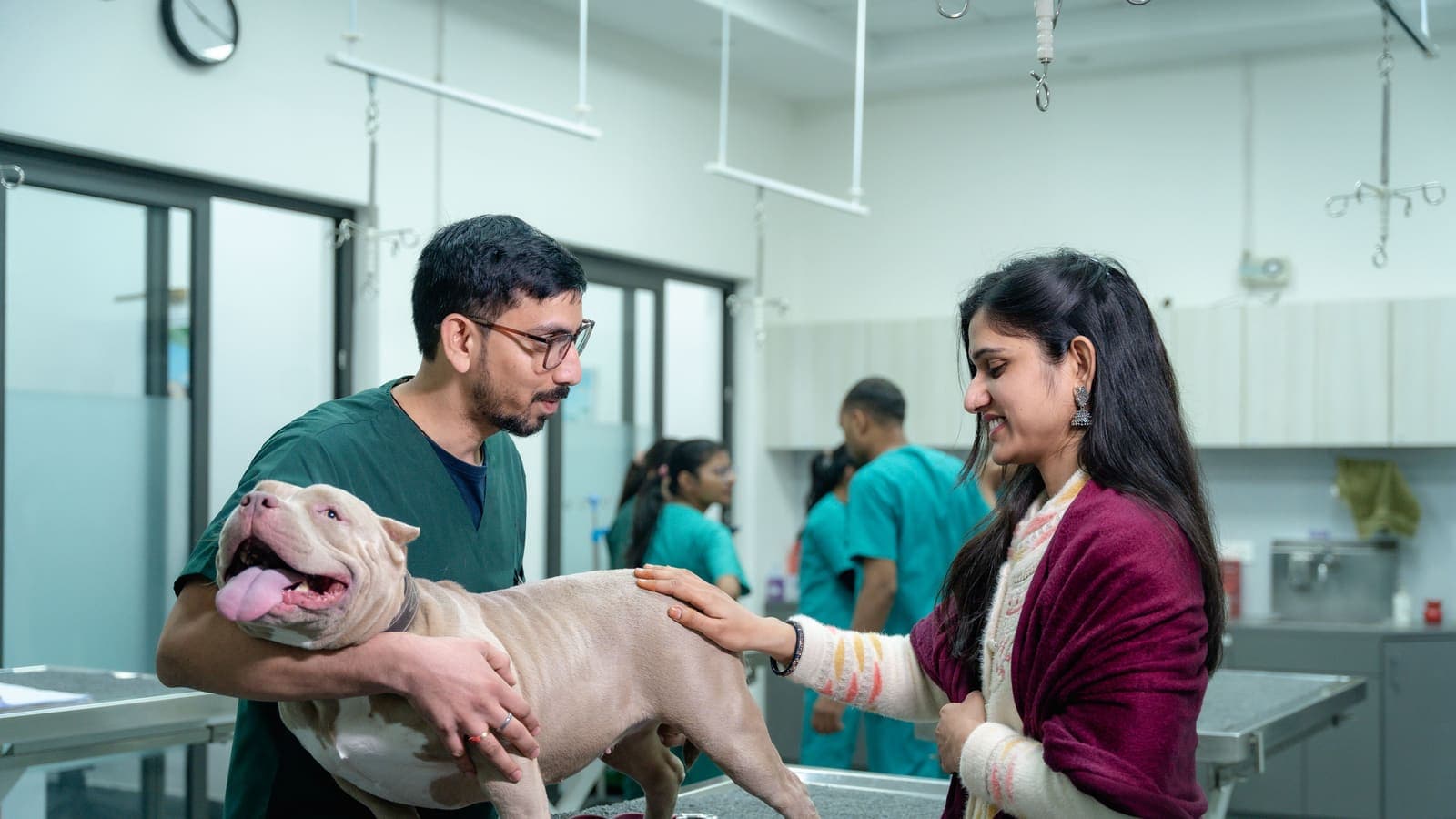
You examine the cat, explain the diagnosis, show the owner the tablets, and agree a recheck in ten days. The owner nods at every step. Ten days later the cat is back, half the course is still in the box, and nobody quite remembers what "with food" was supposed to mean.
This is not carelessness. In human medicine, the often-cited estimate is that patients forget 40 to 80 percent of what a clinician tells them almost straight away, and that nearly half of what they do remember is wrong. A veterinary consultation adds its own difficulties: the person receiving the information is not the patient, is often worried, is sometimes holding a struggling animal, and will have to give the treatment to someone who did not agree to it.
What happens between the consulting room and home is not fully in your control. But the studies point to a handful of things in the consultation itself that change how much of the plan survives the trip.
What happens once they get home
The veterinary numbers are smaller than the human ones, but they say the same thing.
| Study | What it found |
|---|---|
| 95 owners giving a 10-day antibiotic course to their dogs (pill counts by phone) | 44% reported giving every dose; 88% gave at least 80%. Compliance was higher when owners felt the vet had spent enough time on the consultation. |
| 90 owners of dogs on short antibiotic courses, with electronic caps on the containers | By the owners' own report and by pill counts, the median was 100%. The caps showed that only 64% of doses were given on time. The vets could not predict which clients would comply. |
| 2,507 cat owners in 57 countries (online survey) | About half were sometimes or never shown how to give a medicine. 77% had been bitten or scratched trying. Over a third had failed to finish a course, mostly because medicating was too difficult. |
Two things stand out. The first is that the self-report is the least reliable measure there is: "yes, all of it" and "all of it, on time" are different answers. The second is that the problems are practical rather than attitudinal. Owners stop because the cat spits out the tablet, the third dose falls in the middle of a working day, or they were never shown how.
1. Make one clear recommendation
In a study from Ontario, researchers filmed consultations in which a vet recommended dental work, surgery or both, then checked each patient's record about six months later. Only 30% of clients had followed the recommendation. The clearest difference between those who did and those who did not was the recommendation itself: when the vet made it clearly, the odds that the client followed it were seven times higher than when it was ambiguous.
"She'll probably need a dental at some point" and "I recommend we clean Bella's teeth under anaesthetic in the next month, and here is why" are different instructions. The first leaves the decision with the owner without telling them so. The second gives them something to agree to, ask about or refuse. The same study found that clients who followed through had consultations that scored higher for relationship-centred care: the vet explained the reasons, asked for the owner's view and treated the plan as shared.
2. Choose a plan the household can actually give
The electronic-cap study found that dosing frequency was the clearest predictor of compliance: owners giving a medicine once or twice a day were nine times more likely to give every dose than those asked to give it three times a day. Where there is a clinical choice between a three-times-daily drug and a once- or twice-daily one, the simpler regimen is not a convenience. It may be the more effective treatment in practice.
A few questions in the room help:
- "What does your day look like?" A dose "every eight hours" lands at 2pm for someone who works away from home. Morning and evening doses can be tied to meals or walks.
- "Has she taken tablets before? How did it go?" In the cat survey, owners rated tablets harder to give than liquids, and 53% would choose a liquid first. If a liquid, a paste, a spot-on or a long-acting injection is a reasonable option for this patient, asking is quicker than finding out at the recheck.
- Show it, don't describe it. Half of the cat owners had sometimes or never been shown how to give a medicine, and nine in ten of those who were shown found it useful. Giving the first dose with the owner watching, or letting them give it with a nurse's help, teaches more than any leaflet.
3. Write it down, in the order it happens
The human-medicine work on recall is consistent: specific instructions are remembered better than general ones, simple words better than technical ones, and information grouped into a few explicit categories better than a stream of advice. Spoken advice should be backed by something written. The formal evidence for written discharge information is thinner than you might expect (a Cochrane review found only two trials, both with parents of children leaving hospital), but in both, written plus spoken information beat spoken alone.
The format matters too. In a 2026 study at a New York referral hospital, 58% of owners of pets on chemotherapy preferred discharge instructions laid out as a designed page over the same text as plain paragraphs. Ninety-six percent of them read the survey on a smartphone, which is probably where they will read your instructions as well.
A layout that works on a phone screen, one line per question:
| Line | Example |
|---|---|
| What | The antibiotic in the white box |
| How much, and when | One tablet with breakfast and one with dinner |
| Until | The last tablet is on Sunday evening, even if she seems well |
| What is normal | Softer stools for a day or two |
| Call us if | She vomits more than twice in a day, or stops eating |
| Next visit | Recheck on Monday 26 October at 10:00 |
The "until" line deserves particular care. In the cat survey, more of the owners who gave up on a course stopped near the end than after the first few doses.
4. Ask them to say it back
"Teach-back" is a simple technique from human medicine: at the end of the explanation, the clinician asks the person to describe the plan in their own words, then corrects whatever has gone astray. A systematic review of 12 studies in people with chronic disease found it improved knowledge of the condition, adherence, confidence and practical skills such as inhaler technique, although not every study reached statistical significance.
The wording matters, because it should feel like a check on your explanation, not a test of the owner:
"I've given you quite a lot of information. So I know I explained it properly, can you tell me how you'll give these at home?"
It takes less than a minute, and it is the only point in the consultation at which you find out what the owner actually took away.
5. Book the next step before they leave, and remind them why
Reminders work. A Cochrane review of 75 studies in human vaccination found that reminders by letter, phone call or text message increased the share of people vaccinated by about eight percentage points, with text messages working about as well as letters.
In veterinary practice there is a twist. A Canadian study of computer-generated recall reminders found that clients responded to vaccination reminders about three times less often than to reminders for other things, such as dental procedures, laboratory tests, progress examinations and neutering. And in a 2026 survey of 1,330 vets and 5,071 cat owners in 14 countries, vets named reminders as the main reason owners vaccinate (71%), while owners named their cat's health (62%) and their vet's recommendation (57%). Fifty-eight percent of owners said their vet was their main source of information about vaccines, but only 23% of vets said they discussed why vaccination matters.
The practical reading of the two studies together: a reminder carries more weight when it carries the reason you gave in the room. "Bella is due her yearly vaccines" is a chore. "Bella is due the vaccines we talked about for her walks by the river" is your recommendation, repeated. And a recheck that is booked at the desk, with a date and a time, does not depend on anyone remembering to phone.
Where software helps, and where it doesn't
Some of this is easier with the right tools. In mypet vet, the free clinic app we make, the vaccinations and visits you record can appear in the owner's mypet care app with reminders for the next dose, and the vaccines due in the next 30 days are listed so each owner gets a reminder in your own words from your own WhatsApp. For owners, we have written the other side of the conversation: what to bring to a vet appointment, and what to write down after.
No app, though, makes an ambiguous recommendation clear, chooses a twice-daily drug over a three-times-daily one, or asks the owner to say the plan back. Those happen in the consulting room, in the last two minutes, and the studies suggest they are worth the time.
Sources
- Kessels RPC. Patients' memory for medical information. Journal of the Royal Society of Medicine 2003;96(5):219–222. doi:10.1177/014107680309600504
- Grave K, Tanem H. Compliance with short-term oral antibacterial drug treatment in dogs. Journal of Small Animal Practice 1999;40(4):158–162. doi:10.1111/j.1748-5827.1999.tb03781.x
- Adams VJ, Campbell JR, Waldner CL, Dowling PM, Shmon CL. Evaluation of client compliance with short-term administration of antimicrobials to dogs. Journal of the American Veterinary Medical Association 2005;226(4):567–574. doi:10.2460/javma.2005.226.567
- Taylor S, Caney S, Bessant C, Gunn-Moore D. Online survey of owners' experiences of medicating their cats at home. Journal of Feline Medicine and Surgery 2022;24(12):1283–1293. doi:10.1177/1098612X221083752
- Kanji N, Coe JB, Adams CL, Shaw JR. Effect of veterinarian-client-patient interactions on client adherence to dentistry and surgery recommendations in companion-animal practice. Journal of the American Veterinary Medical Association 2012;240(4):427–436. doi:10.2460/javma.240.4.427
- Johnson A, Sandford J. Written and verbal information versus verbal information only for patients being discharged from acute hospital settings to home: systematic review. Health Education Research 2005;20(4):423–429. doi:10.1093/her/cyg141
- Hohenhaus AE, Lordahl R, Ghali H, Provost DC. Use of a graphic design for oncology discharge instructions is preferred by pet owners over text-only instructions with identical readability. Journal of the American Veterinary Medical Association 2026 (online ahead of print). doi:10.2460/javma.26.05.0334
- Ha Dinh TT, Bonner A, Clark R, Ramsbotham J, Hines S. The effectiveness of the teach-back method on adherence and self-management in health education for people with chronic disease: a systematic review. JBI Database of Systematic Reviews and Implementation Reports 2016;14(1):210–247. doi:10.11124/jbisrir-2016-2296
- Jacobson Vann JC, Jacobson RM, Coyne-Beasley T, Asafu-Adjei JK, Szilagyi PG. Patient reminder and recall interventions to improve immunization rates. Cochrane Database of Systematic Reviews 2018;1:CD003941. doi:10.1002/14651858.CD003941.pub3
- Adams VJ, Waldner CL, Campbell JR. Analysis of a practice management computer software program for owner compliance with recall reminders. Canadian Veterinary Journal 2006;47(3):234–240. PMC1371051
- Carroll EL, Nawar N, Bourgeois M. Drivers, barriers and unmet needs affecting feline vaccination compliance: insights from a global survey of cat owners and veterinarians. Veterinary Sciences 2026;13(7):646. doi:10.3390/vetsci13070646
This article summarises published studies for veterinary professionals. It is not a protocol: which treatment, formulation and follow-up suit a patient is the treating vet's decision.