Between visits: the home measurements worth asking owners for
For vets: which numbers owners can collect reliably at home, what the studies say they tell you, and how to ask so the readings come back usable. Sleeping breathing rate, glucose curves, water intake, pain scores and seizure logs.
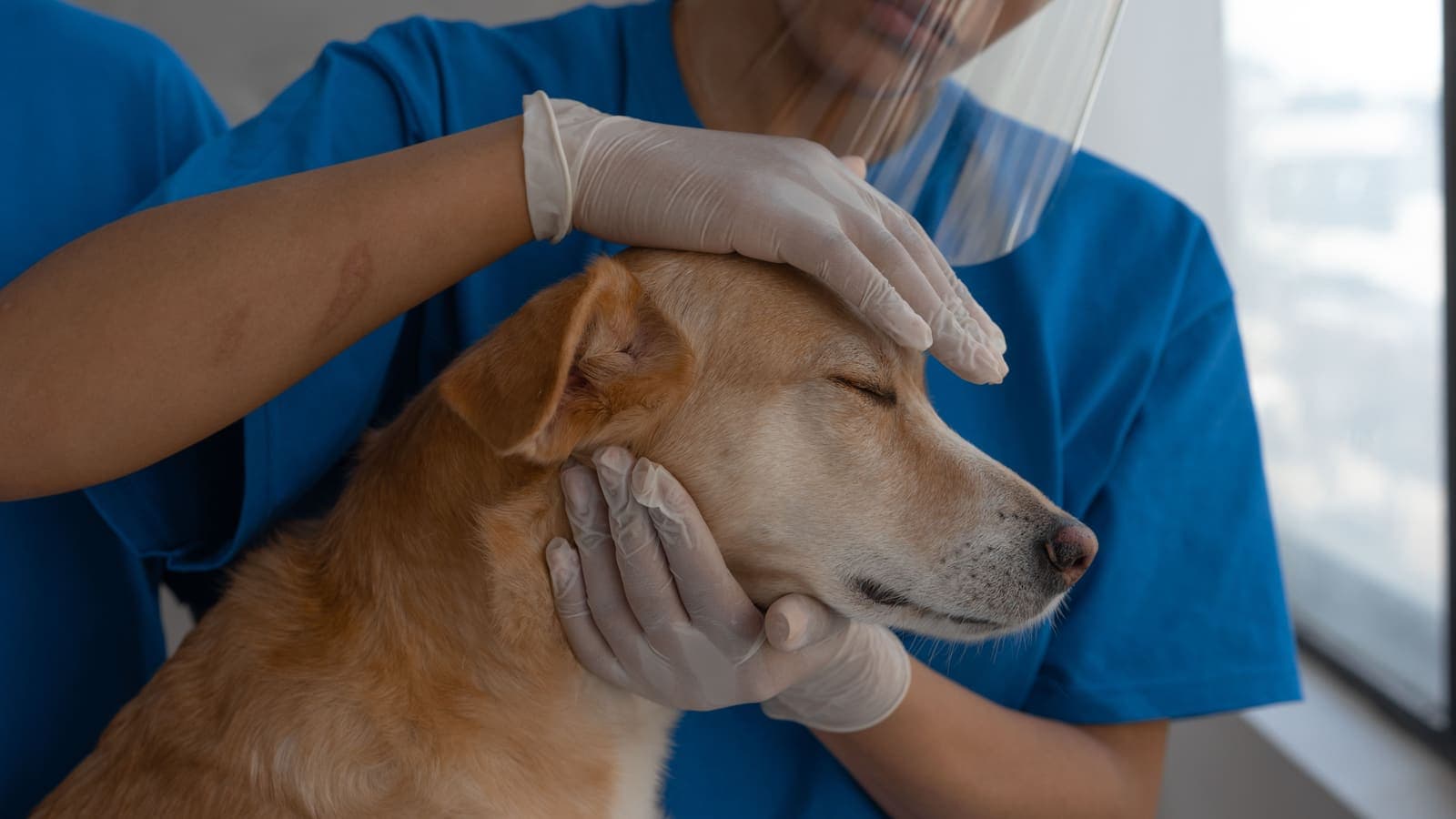
A dog with mitral valve disease might spend an hour a year in your consulting room. The other 8,759 hours it spends at home, in front of the one person who sees it every day: the owner. Most of what decides how that dog does, the night its breathing quietly speeds up, the week it drinks a little more, happens where you cannot see it.
The guidelines have started to say so plainly. The 2019 ACVIM consensus on mitral valve disease in dogs encourages a structured, home-based programme for heart-failure patients: owners tracking weight, appetite and breathing, with support from the clinic. Of everything an owner can watch, it singles out one: a rise in resting respiratory rate above the dog's normal baseline is the best early warning of decompensation.
The question for a clinic is not whether owners can help, but which measurements they can take reliably and which actually change a decision. Five hold up well in the published work.
1. Sleeping respiratory rate, for heart patients
This is the best supported, and the easiest to teach. A small group of cardiologists in Israel, Sweden, Italy and the United States asked owners to count breaths at home, and built the reference values most clinics now use:
| Group | What owners counted at home |
|---|---|
| Healthy adult dogs (114 dogs) | Average 13 breaths a minute. No dog averaged more than 23. |
| Dogs with subclinical heart disease (190 dogs) | Average 16. Generally below 25. |
| Healthy cats and cats with subclinical heart disease | Consistently below 30. |
| Dogs and cats with heart failure, well controlled on treatment | Most below 30. |
The practical threshold follows from the table: a sleeping rate that stays above 30 is faster than healthy and well-controlled animals almost ever breathe, and repeated counts above 30 in a cat warrant a look. But the more useful number is the animal's own. A dog that sleeps at 14 for months and then at 24 has told you something, even though 24 is "normal".
What makes the counts usable:
- Asleep, not dreaming, not just after exercise. Resting counts run higher than sleeping ones, which is why the studies kept them apart.
- A baseline first. Ask for a count every day or two for the first couple of weeks, so you both know what normal looks like for this patient.
- A written number and a written action, set by you for this patient. Something like "above 30 on two counts in a day: phone us today". Owners act on a rule; they hesitate over a judgement.
We wrote the owner's side of this, with a step-by-step method you can send them: counting your pet's breaths while it sleeps.
2. Glucose curves at home, for diabetic cats
A curve done in the clinic measures a cat that is stressed and often not eating, which is not the cat you are dosing. In a Zurich study, 12 of 15 cat owners learned to produce home curves over four months. Glucose in the hospital tended to run lower than at home, probably because the cats ate less there, and in 38% of cases the dose decision based on the hospital curve would have been different from the one based on the home curve.
It is not for everyone. In a longer series of 26 cats from the same group, eight owners could not manage home monitoring at all. Of those who could, 14 produced a curve every two to four weeks, some for years. The usual obstacles are practical: holding the cat, getting a drop from the ear, needing two people. Most are solved by teaching it once, in the clinic, with the owner's own meter.
Two points from the guidelines are worth passing on. The ISFM guidelines note that with proper support, owners monitoring at home may improve glycaemic control, and that watching the cat's other signs, not only the glucose numbers, is vital in judging the response to insulin. The AAHA guidelines call home glucose monitoring ideal but not mandatory. And in the Zurich series, home monitoring did not reduce how often cats came back for rechecks. It makes visits better informed rather than fewer.
3. Water intake, for polyuria and polydipsia
"Drinking more" is the most common thing owners notice and the least precise. Measured intake turns it into a number. In dogs, polydipsia is usually defined as more than 90 to 100 ml per kg a day; a 2026 review in the Journal of Small Animal Practice adds that it can show at much lower volumes in a dog that normally drinks little. Again, the patient's own baseline is the reference that counts.
The method owners can follow:
- One bowl, filled to a mark, topped up from a measuring jug, for 24 hours.
- Subtract what is left, and repeat for two or three days.
- Keep the diet the same. A cat on wet food takes in much of its water with its meals, so a change of food changes the bowl.
- Other pets drinking from the same bowl make the number meaningless; say so when you ask.
For a cat with chronic kidney disease or a diabetic on insulin, a weekly 24-hour measurement is a cheap trend line between blood tests. The owner's side, for cats: your cat is drinking more water.
4. Pain scores, for osteoarthritis
Owners are better than a ten-minute examination at seeing how an arthritic dog gets up from the floor, takes the stairs or walks on a cold morning. The problem has always been turning that into something comparable from one visit to the next. Validated owner questionnaires do it.
The Canine Brief Pain Inventory, filled in by owners, picked up the difference between carprofen and placebo over 14 days in a randomised trial of 70 dogs with osteoarthritis. The Liverpool Osteoarthritis in Dogs questionnaire is the other widely used one, now with validated German and Spanish versions. For cats, the Feline Musculoskeletal Pain Index was refined in 2022 into a nine-question short form that separates analgesic from placebo better than the original.
Whichever you choose, the rules are the same: the same questionnaire, filled in by the same person, before you start or change analgesia and again at the recheck. A score on its own means little; the change between two scores is the measurement.
5. A seizure log, for epilepsy
The International Veterinary Epilepsy Task Force, following the definitions used in human epilepsy, calls a dog seizure-free after a treatment change only once no seizure has occurred for three times the longest interval between seizures in the previous twelve months, or for twelve months, whichever is longer. Until then, the outcome is "undetermined". None of that can be worked out from "about once a month": it needs the dates.
So the log has to be dated. For each seizure: the date and time, how long it lasted, what it looked like, whether more than one came within 24 hours, and whether a rescue medication was given. Owners keep this best when it lives somewhere they already look every day.
What makes home readings worth having
Across all five, the same few things decide whether the numbers come back usable or not:
- Ask for one or two things, not five. An owner who is counting breaths, measuring water, weighing and scoring pain will stop doing all of it.
- Fix the method. Same time of day, same state (asleep), same bowl, same questionnaire.
- Baseline first, then changes. Most of these measurements mean more compared with the same animal than with a reference range.
- Give a threshold and an action, in writing. "Call us today if…" is what turns a number into a decision.
- Agree an end date. "Every day until the recheck on the 20th" is a task people finish. "Keep an eye on it" is not.
- Look at the readings. Owners keep going when the numbers are discussed at the next visit, and stop when nobody asks.
A paper chart on the fridge, photographed before each visit, works. Readings sent as WhatsApp messages tend to get lost in the chat. If you would rather have them in one place, this is what we built "Watch at home" in mypet vet for: you choose what the owner logs, how often and until when, with your own limits. The owner gets a reminder in mypet care each day something is due, and you see the readings as small charts on the patient's page, with anything beyond your limits marked. It is free for clinics. But the method matters more than the tool, and everything above works on paper too.
Sources
- Keene BW, Atkins CE, Bonagura JD, et al. ACVIM consensus guidelines for the diagnosis and treatment of myxomatous mitral valve disease in dogs. Journal of Veterinary Internal Medicine 2019;33(3):1127–1140. doi:10.1111/jvim.15488
- Rishniw M, Ljungvall I, Porciello F, Häggström J, Ohad DG. Sleeping respiratory rates in apparently healthy adult dogs. Research in Veterinary Science 2012;93(2):965–969. doi:10.1016/j.rvsc.2011.12.014
- Ohad DG, Rishniw M, Ljungvall I, Porciello F, Häggström J. Sleeping and resting respiratory rates in dogs with subclinical heart disease. Journal of the American Veterinary Medical Association 2013;243(6):839–843. doi:10.2460/javma.243.6.839
- Ljungvall I, Rishniw M, Porciello F, Häggström J, Ohad D. Sleeping and resting respiratory rates in healthy adult cats and cats with subclinical heart disease. Journal of Feline Medicine and Surgery 2014;16(4):281–290. doi:10.1177/1098612X13508940
- Porciello F, Rishniw M, Ljungvall I, Ferasin L, Häggström J, Ohad DG. Sleeping and resting respiratory rates in dogs and cats with medically-controlled left-sided congestive heart failure. The Veterinary Journal 2016;207:164–168. doi:10.1016/j.tvjl.2015.08.017
- Casella M, Hässig M, Reusch CE. Home-monitoring of blood glucose in cats with diabetes mellitus: evaluation over a 4-month period. Journal of Feline Medicine and Surgery 2005;7(3):163–171. doi:10.1016/j.jfms.2004.08.006
- Kley S, Casella M, Reusch CE. Evaluation of long-term home monitoring of blood glucose concentrations in cats with diabetes mellitus: 26 cases (1999–2002). Journal of the American Veterinary Medical Association 2004;225(2):261–266. doi:10.2460/javma.2004.225.261
- Van de Maele I, Rogier N, Daminet S. Retrospective study of owners' perception on home monitoring of blood glucose in diabetic dogs and cats. Canadian Veterinary Journal 2005;46(8):718–723. PubMed 16187716
- Sparkes AH, Cannon M, Church D, et al. ISFM consensus guidelines on the practical management of diabetes mellitus in cats. Journal of Feline Medicine and Surgery 2015;17(3):235–250. doi:10.1177/1098612X15571880
- Behrend E, Holford A, Lathan P, Rucinsky R, Schulman R. 2018 AAHA Diabetes Management Guidelines for Dogs and Cats. Journal of the American Animal Hospital Association 2018;54(1):1–21. doi:10.5326/JAAHA-MS-6822
- Pavlovsky G. Psychogenic polydipsia in dogs: a review of pathogenesis, diagnosis and treatment. Journal of Small Animal Practice 2026;67(7):580–589. doi:10.1111/jsap.70105
- Brown DC, Boston RC, Coyne JC, Farrar JT. Ability of the Canine Brief Pain Inventory to detect response to treatment in dogs with osteoarthritis. Journal of the American Veterinary Medical Association 2008;233(8):1278–1283. doi:10.2460/javma.233.8.1278
- Enomoto M, Lascelles BDX, Robertson JB, Gruen ME. Refinement of the Feline Musculoskeletal Pain Index (FMPI) and development of the short-form FMPI. Journal of Feline Medicine and Surgery 2022;24(2):142–151. doi:10.1177/1098612X211011984
- Radke H, Rodriguez NAR, Lafuente P, et al. Linguistic validation and cross-cultural adaptation of the Liverpool Osteoarthritis in Dogs instrument for the German- and Spanish-speaking populations. Veterinary and Comparative Orthopaedics and Traumatology 2025;38(5):227–235. doi:10.1055/a-2543-7681
- Potschka H, Fischer A, Löscher W, et al. International Veterinary Epilepsy Task Force consensus proposal: outcome of therapeutic interventions in canine and feline epilepsy. BMC Veterinary Research 2015;11:177. doi:10.1186/s12917-015-0465-y
This article summarises published studies and guidelines for veterinary professionals. It is not a protocol: the right measurements, thresholds and timings for a patient are the treating vet's decision.