Colic in horses: the signs, the first hour, and what to do while you wait for the vet
Colic is the leading medical cause of death in horses, and most cases start with something an owner could have noticed at the evening check. The signs from subtle to obvious, what to do in the first hour, the myths that cost time, and the routine that makes colic rarer.
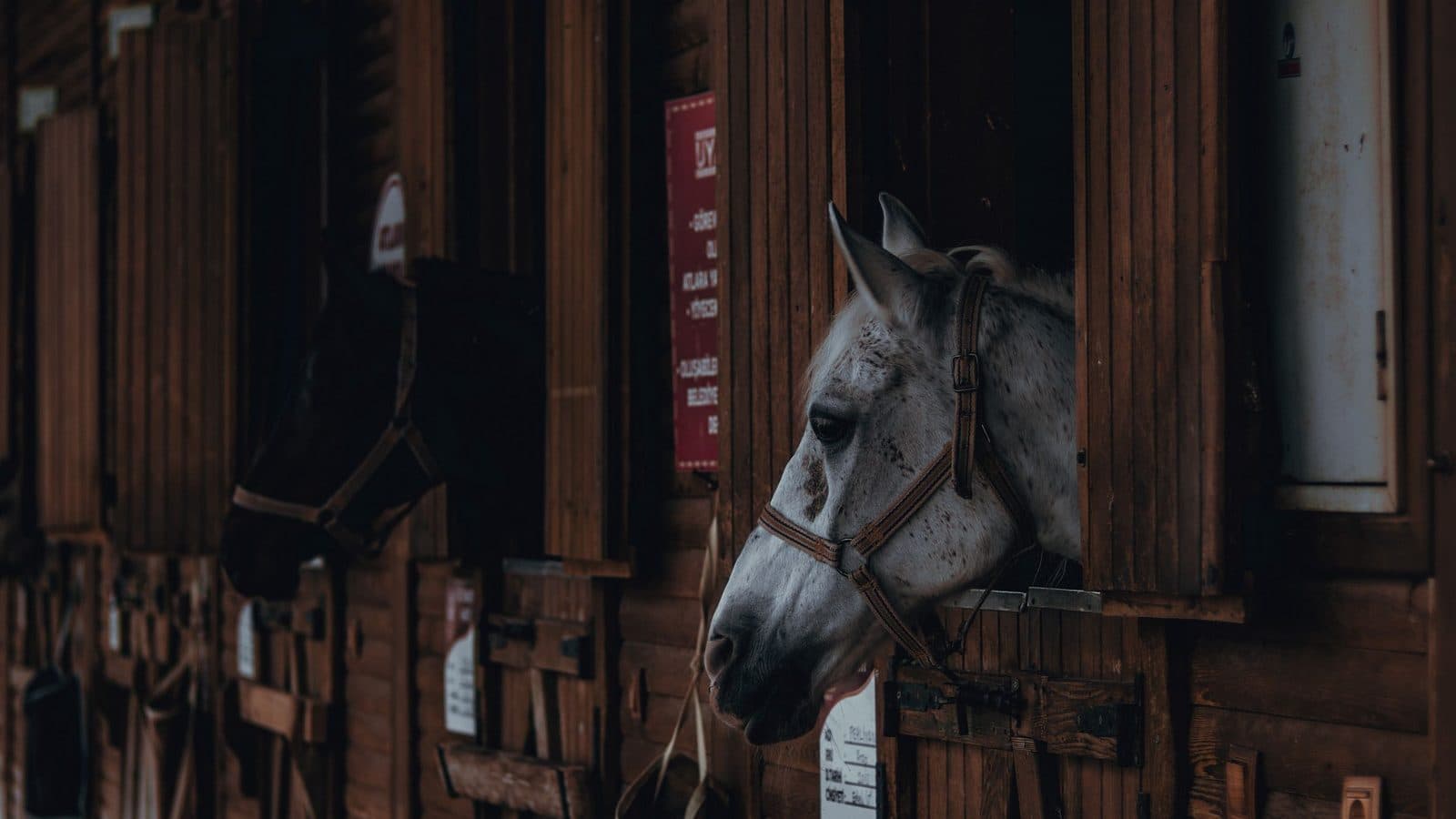
Every horse owner learns the word early, and most of them will use it at least once. Colic simply means abdominal pain. It is not one disease but a sign, with causes that range from a mild gut cramp that passes in an hour to a twisted bowel that kills in a night. Around one horse in ten has an episode in any given year, and it remains the leading medical reason horses die or are put to sleep.
The good news is that the great majority of cases, roughly four in five, resolve with a single visit and medical treatment. What separates a good outcome from a bad one is very often time: how quickly the pain was noticed, and how quickly a vet was involved.
What colic looks like
Horses are prey animals and hide discomfort well, so the early signs are quiet.
Subtle, the ones that matter most:
- off their feed, or eating slowly and losing interest;
- fewer droppings than usual, or none at the morning check; droppings that are dry, small or covered in mucus;
- standing apart, dull, not coming to the gate;
- turning to look at the flank, or standing stretched out as if to urinate without producing anything;
- curling the top lip, yawning repeatedly, or grinding teeth;
- lying down more than usual, or lying quietly at a time the horse would normally be up and eating.
Obvious, by which point it is already urgent:
- pawing the ground, kicking or biting at the belly;
- getting up and lying down again and again;
- rolling, especially violent rolling, and rolling with sweat;
- sweating without exercise, a rapid heart rate, flared nostrils;
- a distended belly; loud or, worse, completely silent guts;
- gums that are dark red, purple or pale rather than salmon pink.
A horse showing any of the obvious signs needs a vet now, not after watching for an hour.
The first hour
Ring the vet first. Not the yard owner, not a friend, not a forum. In most of Europe an equine vet on call will ask you a set of questions and decide whether to come at once or advise you what to watch for; either way the clock has started with the right person.
While you wait:
- Take the food away. Hay, hard feed, grass. A horse in pain may still eat, and more food in a gut that is not moving makes things worse. Water can stay, in most cases; the vet will say if not.
- Note the numbers. Heart rate if you know how (normal is about 28 to 44 beats a minute at rest, and above 60 during colic is a serious sign), gum colour, gut sounds on both sides, temperature, and when the horse last ate and last passed droppings. Write them down with the time.
- Keep the horse safe. A stable with deep bedding and nothing to get caught on, or a small paddock. If the horse wants to lie quietly, let it. If it is thrashing and at risk of injuring itself or getting cast against a wall, a slow walk in hand on a soft surface can help until the vet arrives.
- Do not give anything from the cupboard. Pain relief given before the vet arrives can mask the signs the vet needs in order to judge how serious the case is, and a horse that has been given a sedative or a painkiller may look better than it is for an hour or two. Give only what the vet on the phone tells you to.
- Have the paperwork and transport ready. Passport, insurance details and a trailer or a friend with one. If this turns into a surgical case the horse needs to travel to a clinic, and the difference between leaving at once and finding a lorry at midnight is measured in survival.
Two myths that cost time
"You must keep a colicking horse walking." Walking a horse for hours was standard advice for a generation. It exhausts an animal that may be about to need surgery, and it does not untwist a twisted gut. A short walk to stop violent rolling, yes. Walking as treatment, no. A horse that lies still and quiet is often better left lying.
"If they roll, the gut will twist." Rolling is a sign of pain, not the cause of a twist. Preventing rolling protects the horse from hurting itself; it does not change what is happening inside.
What the vet does, and the decision that follows
The examination is quick and revealing: heart rate, gut sounds, gum colour, a rectal examination, often a stomach tube to check for reflux (fluid backing up, a sign that something is blocked) and, increasingly, an ultrasound scan in the field. Most horses get pain relief, an antispasmodic and fluids, and are re-examined within hours.
Sometimes the vet says the words every owner dreads: this needs surgery. Colic surgery costs, across Europe, somewhere between €4,000 and €10,000, and the decision has to be made fast. Survival for horses that go to surgery promptly is good, often above seven in ten for the common conditions, and much lower when the decision is delayed.
The time to think about that decision is not at two in the morning with your horse sweating in front of you. Decide now, calmly, what you would do, and whether you are insured for it. Vet-fee insurance for horses in Europe typically covers colic surgery up to a set limit; check the limit, the excess and whether there is a waiting period. If you are not insured, decide what your ceiling is and tell your vet in advance. Both are legitimate choices. Making the choice in a panic is not.
Making colic rarer
The causes, when one is found, are mostly about the gut being asked to do something it did not evolve for. A horse's digestive system expects to trickle-feed on fibre for sixteen hours a day. Most of what raises the risk is a departure from that.
- Forage first, always. Good hay or grazing, available for most of the day. Long gaps without fibre and large concentrate meals are the two best- documented risk factors. If hard feed is needed, split it into small meals.
- Change nothing suddenly. New hay, a new field, a new feed, more or less turnout: every change over ten to fourteen days. A change of hay batch is one of the commonest triggers and one of the least suspected.
- Water, in quantity, at a temperature the horse will drink. A horse drinks 25 to 50 litres a day and more in heat. Frozen troughs in winter and warm, algae-covered water in a Mediterranean summer both cut intake, and reduced drinking is the classic route to an impaction. Salt in the diet keeps them drinking.
- Sand. Horses grazing sparse or sandy pasture, common on the coast and across much of southern Europe, swallow sand with the grass, and it settles in the gut. Feed hay off the ground on mats or in racks, and ask your vet about a psyllium course a few days a month.
- Teeth and worms. A dental check once a year and a worming programme based on faecal egg counts rather than the calendar. Tapeworm is particularly linked to one kind of colic, and a targeted autumn treatment is routine advice in most of Europe.
- Know your horse. How many droppings a day, how much water, how much hay, how it stands and lies. The horse that colics at 2 am usually gave a quieter sign at the 6 pm check.
Keep a record
Horses are big enough that their records tend to live in a folder in the tack room, with the passport. The things that help a vet most in a colic call are the ones that are easiest to lose: the last worming and what was used, the date of the last dental, any earlier colic and what it turned out to be, the current feed, and a recent weight or girth measurement. If you keep your horse's profile in mypet care, the vaccination card, the visit log and the weight chart hold exactly that, and it is on your phone in the field at two in the morning, which is where you will need it.