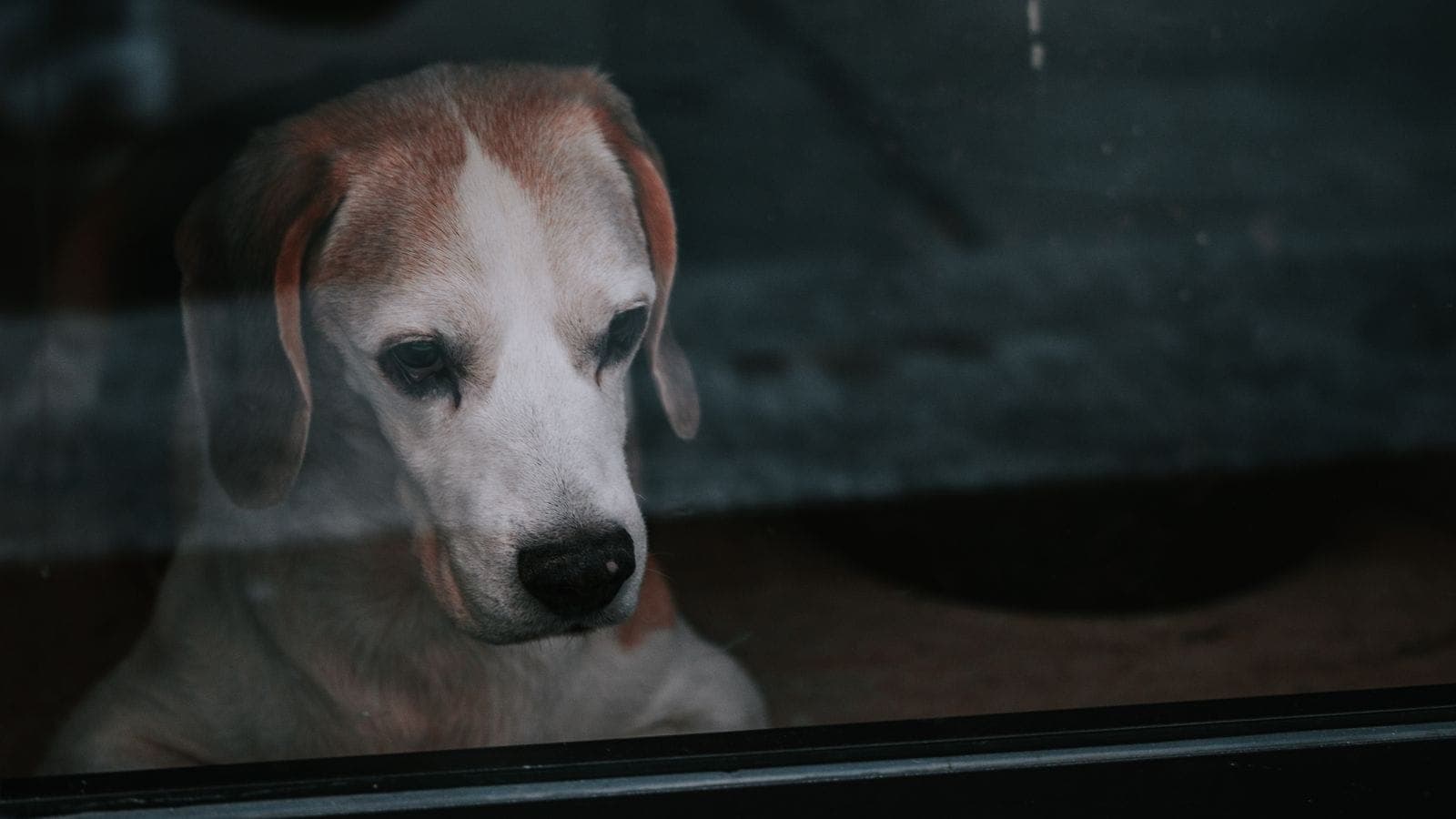
Fireworks: preparing a dog for New Year, starting in November
Roughly half of dogs are frightened by fireworks, and the ones that are get worse every year unless someone changes something. What to do on the night is the small part. The eight weeks before it are where the fear is actually reduced.
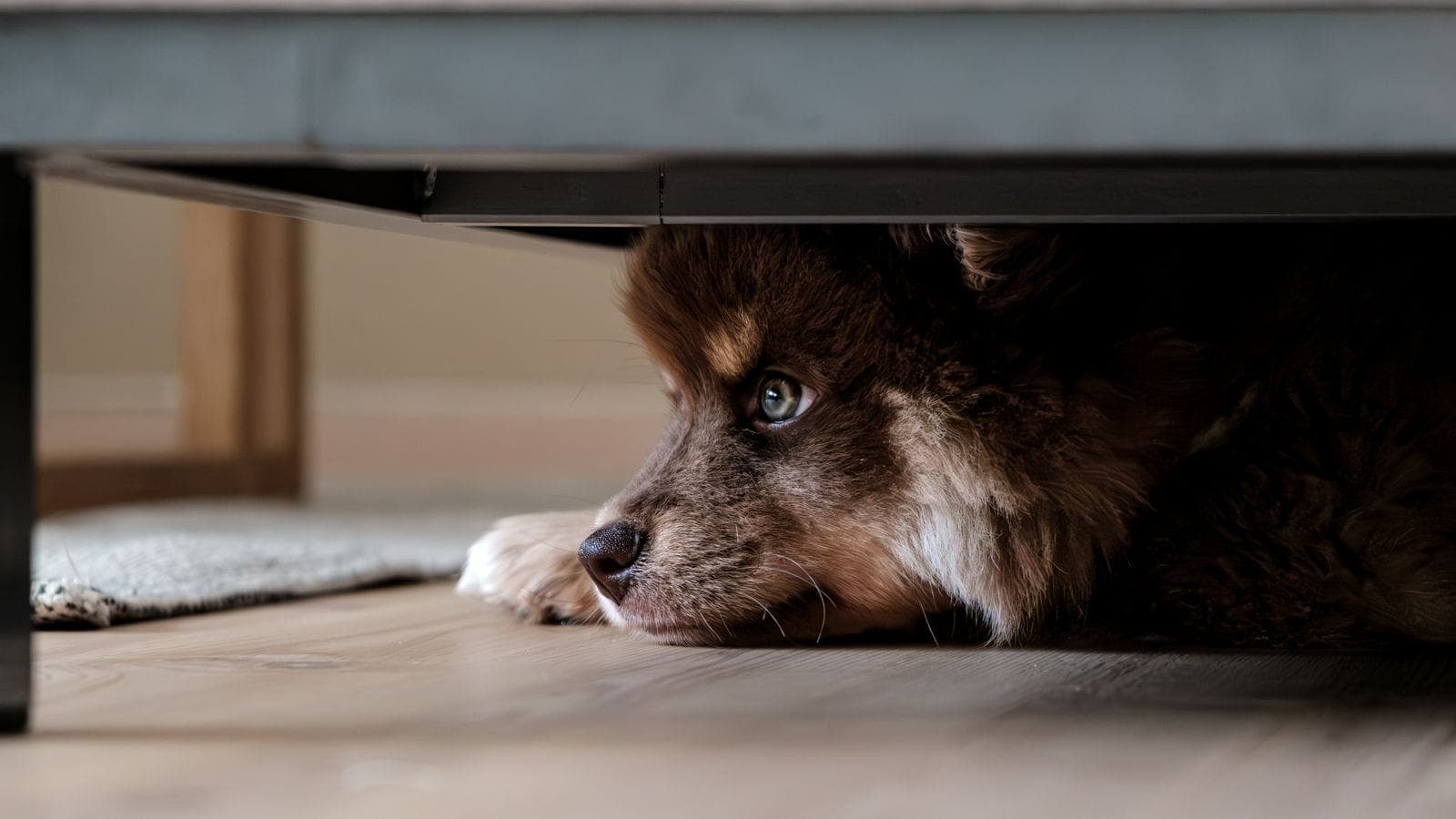
Around half of all dogs are frightened by fireworks — and the fear tends to get worse each year, not better, because every New Year is another night of proof that the sky is dangerous. The dog that trembled at three is hiding in the bath at six and refusing to go out after dark by eight.
Most advice covers the night itself: close the curtains, turn the telly up. That helps a little. The thing that actually reduces the fear is done in the weeks before, quietly, when there are no fireworks at all. Which is why the time to start is November, not the 31st.
First: is it fear, or is it pain?
An odd place to start, but it matters. Vets have noticed that noise fear which appears or sharply worsens in an older dog is often linked to pain — usually undiagnosed arthritis. The bang makes the dog startle and tense, the tensing hurts, and the dog learns that bangs hurt. If your dog's fireworks fear is new this year, or much worse than last, a vet check before you start any training is not wasted.
November and December: the actual treatment
The method is the same one used for any phobia — sound at a level the dog barely notices, paired with something good, for weeks, edging the volume up.
Get the sounds. Firework recordings are free from several animal charities and on every streaming service. You want real bangs, whistles and crackles, not music with fireworks in the background.
Start absurdly quiet. So quiet you can barely hear it, in a room where the dog is relaxed. Play it while the dog eats, or during a game, or while it chews something it loves. Five or ten minutes. The dog should not react at all. If it does, you started too loud.
Raise the volume by a notch every few days. Not every session. The dog's job is to notice the noise and go back to what it was doing. Any sign of worry — ears back, looking for the exit, refusing the food — means the last step was too big. Drop back two notches and stay there longer.
Aim for real-world volume by mid-December, with the dog still eating through it. Then keep it up, a session every couple of days, until the night.
Build the den now, not on the 31st. A dog needs somewhere it has decided is safe, and it decides that over weeks. Somewhere small and enclosed — a crate with a blanket over it, the gap behind the sofa, under a table with the cloth down to the floor — with bedding, water and a chew, in the most muffled room in the house. Let the dog use it in November for naps. By New Year it is the obvious place to go.
This takes ten minutes a day for about eight weeks. Most dogs with mild to moderate fear improve noticeably in one season, and the improvement carries to the next year. A dog with severe fear needs the same programme plus help from the vet — see below.
The week before
- Walk early. All week, the last walk is before dark, and on the 31st it is late afternoon. A dog that panics on a lead outside is far harder to keep safe.
- Check the fence, the gate, the ID. Terrified dogs go through fences they have never touched. More dogs are lost on New Year's Eve than any other night. Collar with your phone number; microchip details current (ring the registry — it takes five minutes).
- Feed earlier. A dog that is too frightened to eat at eight is fine having eaten at five.
- Ask about medication, if the fear is severe. There are now well-tolerated, short-acting medicines a vet can prescribe specifically for noise events. They are not sedatives that leave the dog awake and terrified but unable to move — that older kind is exactly what you do not want. Do not wait until the 30th; the vet needs time, and some are worth trialling on a quiet evening first.
On the night
Close everything before dark. Curtains, blinds, windows, the cat flap. The flashes are as frightening as the bangs for many dogs.
Sound on. Television, radio, a fan — something steady and boring that softens the difference between silence and a bang.
Let the dog choose. If it goes to the den, leave it there. If it wants to sit on you, let it. Do not drag it out from under the bed to "show it there's nothing to fear".
Be normal. Comforting a frightened dog does not "reward the fear" — that is an old idea and it is wrong. Calm, quiet company is fine. Frantic soothing is not, because your tension is contagious. Sit with it, read a book.
Don't leave it alone. Not this one night. A dog that panics alone can hurt itself badly. If you are going out, someone stays, or the dog goes with you to somewhere quieter.
Keep the doors shut even indoors — a panicking dog bolts through the front door when a guest arrives.
And afterwards
Write down how it went: what the dog did, when it started, when it settled, what helped. Next year's plan is built from it, and you will not remember by November. The health history in mypet care is a fine place for it — one entry, dated 1 January, that you will thank yourself for in ten months.
If this year was bad despite the preparation, that is the year to ask the vet for a referral to a behaviourist. Noise fear is one of the most treatable things a behaviourist sees, and one of the most miserable to leave alone.