Separation anxiety: what it is, what it isn't, and the training that works
A dog that chews the door and howls for an hour is not being naughty — it is having a panic attack. Most "separation anxiety" is not that, though, and the difference decides what you do. How to tell, and the slow method that actually works.
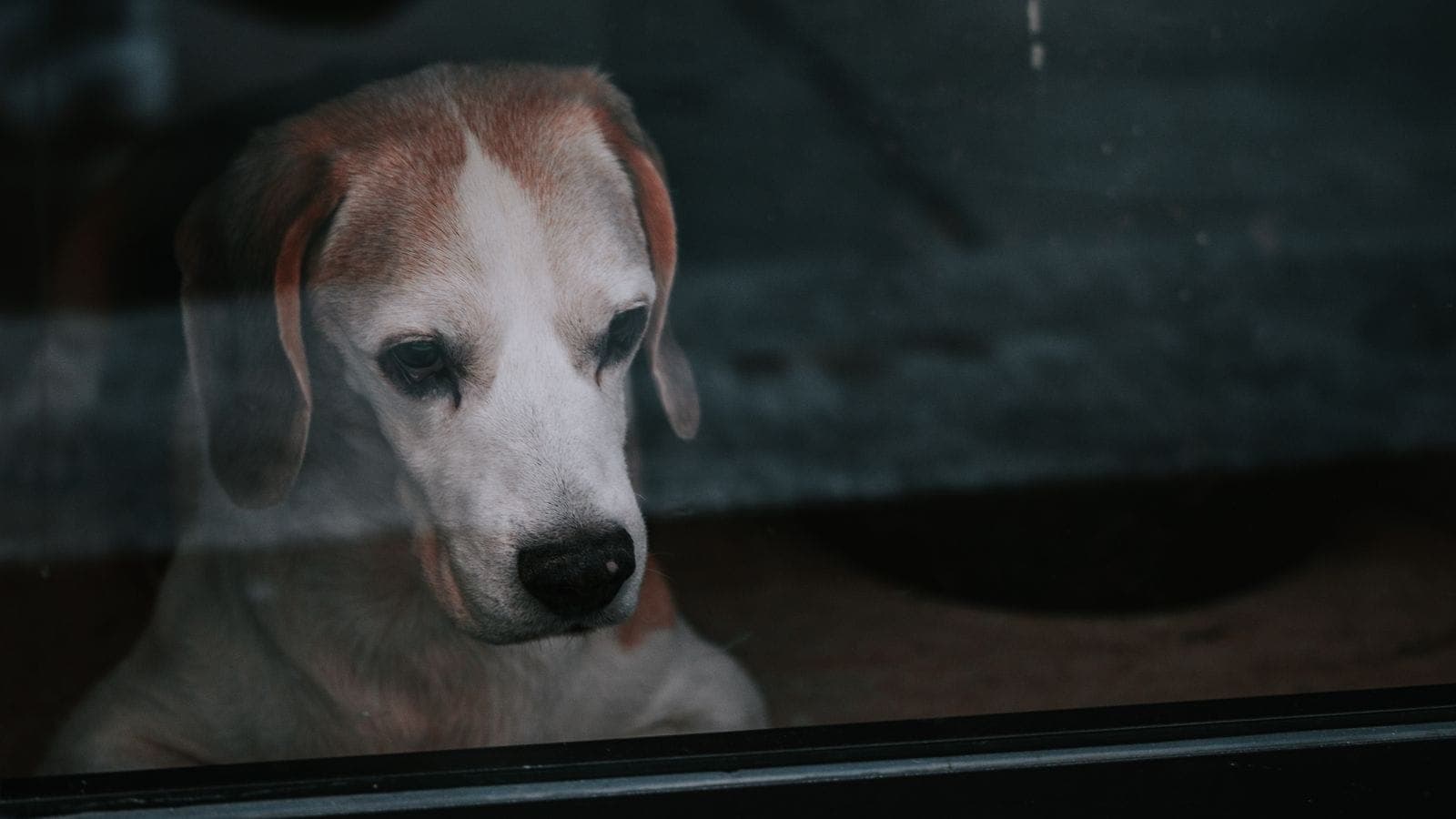
You come home to a chewed door frame, a puddle, and a neighbour who mentions the howling. The internet says separation anxiety. Sometimes it is. Quite often it isn't, and the two problems need opposite treatment — which is why so many people work at it for months and get nowhere.
What it actually is
True separation anxiety is panic. The dog is not bored, not annoyed at being left, not "getting back at you". It is frightened in the way a person with a phobia is frightened: the fear starts before you have gone, peaks in the first twenty or thirty minutes, and the dog cannot settle at all while you are away.
The signs that point to real panic rather than boredom:
- It starts before you leave. Pacing, panting, whining and shadowing you as you pick up your keys or put on shoes. The dog has learned the sequence.
- The damage is at exits. Doors, door frames, window sills, the crate bars — the places a dog scrabbles at to get to you. A bored dog chews the cushion on the sofa; a panicking dog chews the front door.
- It cannot eat. A stuffed chew or a treat left down is untouched until you return. A dog that empties the chew and then chews the skirting board is bored.
- Toileting indoors from a house-trained dog, often with drool and, in the worst cases, injury to paws or mouth from trying to escape.
- The greeting is not just happy; it is frantic and lasts.
The cheapest diagnostic tool you own is your phone. Prop it up, leave for twenty minutes, watch the video. Most people are surprised either way: the "anxious" dog that settles after four minutes of grumbling, or the "fine" dog that has been shaking by the door the whole time.
What it usually isn't
Boredom. An under-exercised, under-occupied adolescent dog left for eight hours will find something to do, and it will be expensive. Fix: more exercise before you leave, something to work on while you are out, and shorter gaps. This is not anxiety and does not need the treatment below.
Not house-trained yet. A young dog left longer than its bladder can manage is not anxious. It is a puppy.
Noise. A dog that is fine alone most days and destroys the room on the day the builders arrive next door has a noise problem, not a separation one.
Frustration at confinement. Some dogs are fine loose in the house and frantic in a crate. That is the crate, not the leaving.
Get these wrong and you will spend weeks on a desensitisation programme for a dog that just needed a longer walk — or, worse, give a genuinely panicking dog "more to do" and a bigger space to panic in.
Why the usual advice fails
"Just leave them; they'll get used to it." They do not. Exposure to the thing you are afraid of, at full strength, does not cure a phobia — it confirms it. Every hour a panicking dog spends alone is practice at panicking.
"Get another dog." The fear is of being without you, not of being alone. Now you have two dogs, one of them anxious.
Punishment. The mess was made hours ago by a dog in a state of fear. Telling it off when you come home teaches it that your return is also bad.
Crating a dog with true separation anxiety. For many of these dogs a crate is a trap, and they will injure themselves trying to get out.
The training that works
The method is unglamorous, slow, and it is the only one with evidence behind it: teach the dog, in tiny steps, that absences are boring and always end.
1. Stop the rehearsals. For the length of the programme, the dog is not left alone for longer than it can cope with — which at the start may be seconds. That means a dog-sitter, a friend, daycare, taking the dog with you, or working from home for a while. This is the part people skip, and it is why the rest fails. You cannot desensitise a dog on Monday if it panics for eight hours on Tuesday.
2. Defuse the cues. Pick up your keys and sit down. Put on your coat and make a coffee. Open the front door and close it again. Dozens of times a day, going nowhere, until the sequence stops meaning anything.
3. Absences measured in seconds. Step out, close the door, come straight back in. No fuss either way. Then five seconds. Ten. Thirty. A minute. You are looking for the dog to be bored by this. If it shows any stress, the last step was too big — go back and make the steps smaller. Progress is not linear; some days you go backwards, and that is normal.
4. Build to real absences. Once the dog is calm for a few minutes, the increments can get bigger, but the rule holds: the dog never gets to practise panicking. The first twenty to thirty minutes are the hard part; a dog that is calm at thirty minutes is usually calm at two hours.
Realistic timescale: weeks to months, not days. A mild case may take a few weeks. A severe one can take longer, and is worth doing with a qualified behaviourist — ask your vet for one who works on referral and uses reward-based methods only.
Medication is not cheating. For a dog in real panic, the vet can prescribe something that lowers the fear enough for training to work. It is a ladder, not a crutch, and it is usually withdrawn once the training has done its job. Plug-in pheromones and calming supplements help some dogs a little; none of them replace the training.
Two things that help everyone
Tire the dog properly before any absence — a sniffy walk does more than a fast one. And keep a log: date, how long you were gone, what you saw on the video, what the dog was like when you got back. Two weeks of that shows you the trend, and the trend is what tells you whether it is working. It is what we built the notes in mypet care for: a line a day, so that when the behaviourist asks "how long can she manage now?", you have a number instead of a feeling.