Lumps: what a vet will ask you, and why "wait and see" needs a date on it
You found a lump. Most are harmless, some are not, and you cannot tell which by feel. What the vet wants to know, the ten-minute needle test that answers most questions on the day, the lumps that should never be watched, and how to keep a lump map so that "has it grown?" has a real answer.
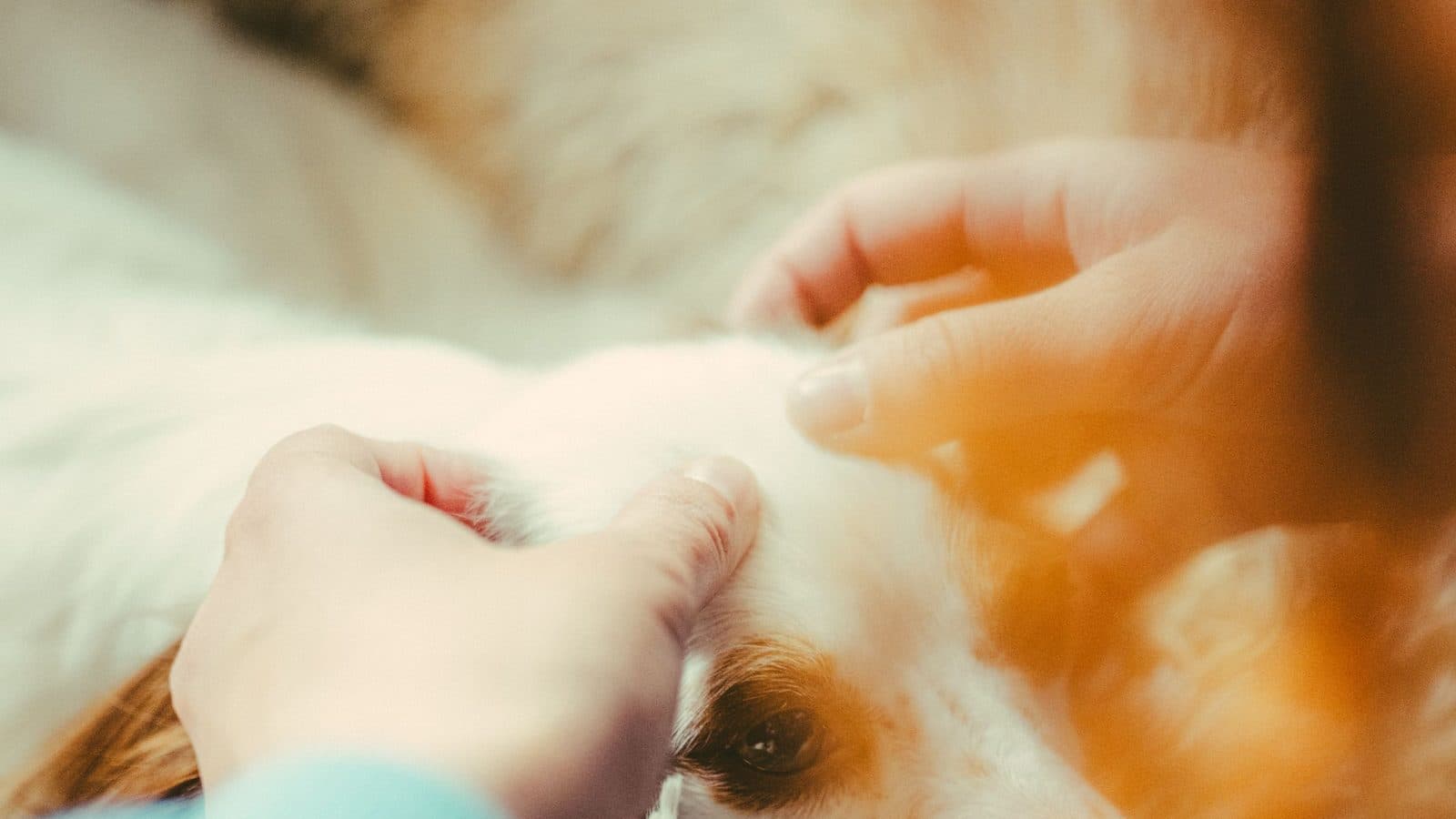
You are stroking the dog on the sofa and your fingers stop. There is something under the skin that was not there, or that you had not noticed. Every owner of a middle-aged dog has had this moment, and most cats get there too. What happens next is usually one of two things: a night of searching the internet, or "I'll keep an eye on it", which quietly becomes six months.
Both are understandable. Neither is the right response. Here is what is.
What you cannot tell by feel
The honest first fact: nobody, including your vet, can reliably tell a harmless lump from a harmful one by looking and feeling. Fatty lumps, cysts, warts, abscesses, mast cell tumours and sarcomas can all be soft or firm, mobile or fixed, slow or fast. The textbook rules of thumb are right often enough to be dangerous.
Some lumps are typical of harmless things:
- a soft, movable, painless lump under the skin in an older dog is very often a lipoma, a fatty lump, the commonest lump in dogs;
- a small wart-like growth on an older dog's skin or eyelid;
- a sebaceous cyst, a firm pea under the skin that sometimes bursts with a waxy material;
- a hot, painful, sudden swelling in a cat after a fight, which is an abscess and needs draining and antibiotics rather than worry.
And some are typical of things that need action: a lump that is ulcerated or bleeding, growing quickly, red and inflamed, changing size from day to day (mast cell tumours can swell and shrink), on the mammary chain of an unspayed female, in the mouth, or fixed to the tissue underneath.
But typical is not certain. The way to know is a needle.
The ten-minute test
A fine-needle aspirate is the single most useful thing that can happen to a new lump. The vet puts a small needle into it, draws a few cells onto a slide, and looks at them under the microscope, often in the same appointment, sometimes sending the slide to a laboratory for a day or two. No sedation, no cutting, about the discomfort of an injection, and a cost across Europe of roughly €40–€120.
It answers the question in most cases: fat, inflammation, a cyst, or a tumour and roughly what kind. When it cannot, because some lumps do not give up their cells easily, the next step is a biopsy under sedation. Both are cheaper than the wrong six months.
Ask for it. A good vet will offer; if yours says "let's just watch it", it is entirely reasonable to reply "could we aspirate it first?"
What the vet will ask
Save the appointment ten minutes and yourself a vaguer answer by having these ready:
- When you first noticed it, and whether it has changed since. Be honest about "I think it might have been there in spring".
- Where exactly, which is harder to say than it sounds on a hairy animal. Part the fur, take a photo with a coin or a ruler beside it, and note it on a rough drawing of the animal.
- Size, measured, not "about a grape". A tape measure or a ruler across the widest part, in millimetres.
- Whether it bothers the animal: licking, scratching, pain when touched, limping if it is on a leg.
- Anything else: weight loss, appetite, thirst, energy, other lumps.
- The animal's history: age, whether neutered, breed (boxers, retrievers, bulldogs, pugs and several others are prone to mast cell tumours; large breeds to fatty lumps), and any lumps before and what they turned out to be.
Lumps that should never be watched
- Anything in the mouth. Oral tumours grow fast and are hard to treat late.
- Mammary lumps in an unspayed female dog or cat. Around half of mammary lumps in dogs are malignant, and in cats most are. Spaying before the first or second season is what prevents them.
- Testicular swellings, or one testicle larger than the other, in an entire male.
- Lumps in a cat. Cats get fewer lumps than dogs, and a higher share of them are malignant; a cat lump is checked, not watched.
- Anything at an injection site in a cat that is still there after three months, larger than 2 cm, or growing. Rare, but it has a name.
- Anything that is growing, bleeding, ulcerated or bothering the animal, and anything on the leg or face where a small removal now is simple and a large one later is not.
- Lumps in a young animal, where "old dog lump" reasoning does not apply.
What "wait and see" has to mean
For a lump the needle has called harmless, or one the vet has judged sensible to watch, watching is a plan with three parts, and without all three it is not a plan.
- A measurement today. Width in millimetres, a photo with a scale, the position marked.
- A date. Four to eight weeks for a new lump, three to six months for a known fatty lump. Put it in mypet care as a reminder, so the date arrives whether or not you remember it.
- A rule. If it has grown by more than a few millimetres, changed texture, become sore, or a new lump has appeared, the wait ends early and the needle comes out.
"Keep an eye on it" without those three is how a lump that could have been removed with a local anaesthetic becomes a surgery with margins, or a lump that was never going to matter becomes six months of low-level worry.
Keeping a lump map
Older dogs collect lumps. By eight or ten, many carry half a dozen, and the question at every check-up is the same: has anything changed? Without a record, the answer is a guess.
Draw the animal, a rough outline from each side and from above, and mark every lump with a number, a date and a size. A photo of each, with a ruler, once a season. Write down what the needle said for each one. The pet's visit log in mypet care will hold the photos and the notes against the date; a folded sheet in the vet's file works too. What matters is that in a year, when your fingers stop on the sofa again, you can say whether this one is number four, unchanged, or something new.
Most lumps are nothing. The way to be sure is a needle and a date, not a feeling and a hope.