Not eating: how long is too long for a dog, and why it's different for a cat
A healthy dog can skip a day's food and be fine. A cat that stops eating for two days can become seriously ill from the not eating itself. The time limits for each, what the way they refuse food tells you, what to try at home, and the mistake that teaches a cat to hate its dinner.
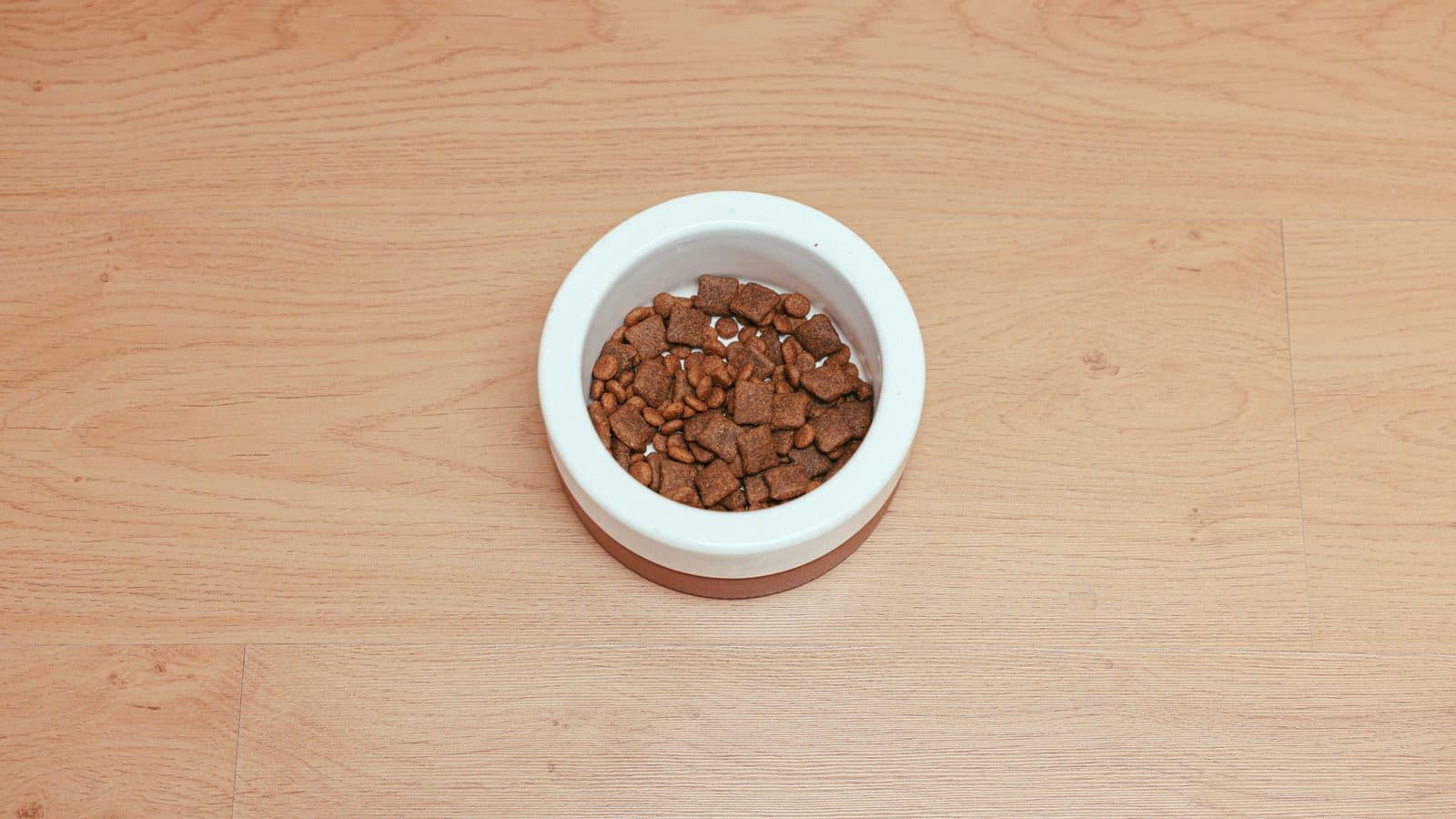
The bowl is still full at bedtime. For most owners this is the first sign of anything being wrong, and it is a good one to take seriously, because appetite is one of the last things an animal gives up. But how seriously, and how fast, depends entirely on whether the bowl belongs to a dog or a cat.
The time limits
Keep these somewhere you will find them at eleven at night.
A healthy adult dog
- Skipped one meal, otherwise bright, drinking, no other signs: watch.
- Nothing for 24 hours, or eating far less for two days: ring the vet and talk it through.
- Nothing for 48 hours: see the vet, whatever else is or is not happening.
A healthy adult cat
- Nothing for 24 hours: ring the vet that day.
- Nothing for 48 hours: this is now urgent, even if the cat seems otherwise fine.
Shorter for everyone vulnerable
- Puppies and kittens: 12 hours. Toy-breed puppies and young kittens can run out of blood sugar in less.
- Diabetic pets on insulin: ring before the next injection. Insulin without food can cause a dangerous low.
- Overweight cats, old animals, and any pet with kidney, liver or heart disease: treat a missed day as a day too many.
Straight away, regardless of time, if not eating comes with repeated vomiting, a swollen or painful belly, retching without bringing anything up (in a large, deep-chested dog this can be a twisted stomach, which is an emergency within the hour), pale or yellow gums, difficulty breathing, collapse, or a cat straining in the litter tray.
Why cats are different
A dog's body copes with a short fast the way ours does. A cat's does not.
When a cat stops eating, its body starts breaking down fat for energy and sends it to the liver to be processed. A cat's liver is poor at handling this flood, and the fat simply accumulates in the liver cells until the organ begins to fail. This is hepatic lipidosis, fatty liver, and it can begin after only a few days without food. The heavier the cat, the more fat there is to mobilise and the greater the risk.
The cruel part is that a failing liver makes the cat nauseous, which stops it eating, which makes the liver worse. The original reason the cat went off its food, a stressful week, a sore tooth, a cold, can be long gone while the cat is now dangerously ill from the fast itself.
Signs are a cat that has not eaten for several days and is now quiet and drooling, vomiting, losing weight fast, and turning yellow, most easily seen inside the ears, on the gums and in the whites of the eyes.
It is treatable, and most cats recover, but the treatment is food: usually a feeding tube placed under a short anaesthetic, used at home for several weeks. It works, and owners manage it far better than they expect. It is also much harder than ringing the vet on day one.
So the rule for cats is blunt: a cat must eat. Never diet a cat by withholding food until it accepts a new one ("he'll eat when he's hungry"). Some will not, and those are the ones that end up in hospital.
What the refusal looks like matters
Watch for two minutes before you decide anything. How an animal does not eat is a clue.
- Walks to the bowl, sniffs, licks its lips, walks away. That is nausea: it wants to and the smell turns its stomach. Drooling and swallowing hard are the same message.
- Picks food up and drops it, chews on one side, cries out, paws at the mouth, goes for soft food but leaves the biscuits. That is mouth pain: a bad tooth, a sore gum, something stuck.
- Shows no interest at all, and is quiet with it. Fever, pain somewhere, or a generally ill animal.
- Eats treats and your dinner but not its own food. In a bright, playful dog that is usually preference, often trained by a history of tasty toppings appearing whenever the bowl was refused. In a cat, take it more seriously.
- Cannot smell. Cats choose food almost entirely by smell, so a cat with a blocked nose from cat flu simply stops recognising food as food.
Other ordinary causes worth thinking through: a change of food, a new bag that has gone stale or rancid, a dirty bowl, the bowl moved next to the litter tray or the washing machine, hot weather, a new pet or a visitor in the house, a recent vaccination, a new medicine (many cause nausea), a bitch in season nearby, or grief after the loss of a companion.
What to try, for one day
For a bright animal with no other signs, inside the time limits above:
- Warm it. Food at about body temperature smells far stronger. A few seconds in the microwave for wet food, stirred well to avoid hot spots, or a splash of warm water on dry.
- Make it smell. A teaspoon of tuna or sardine in spring water, a little plain cooked chicken, or the liquid from cooking it, mixed in. No onion, garlic, salt or sauces.
- Offer it fresh, little and often. Wet food that has sat out for an hour is unappealing; take it up and try again later with a new portion.
- Change the setting. Somewhere quiet, away from other pets. A wide, shallow dish for a cat; many dislike their whiskers touching the sides. Sit with them. Some animals eat from a hand or a finger when they will not eat from a bowl, and a few mouthfuls often restart the appetite.
- Clear a blocked nose: ten minutes in a steamy bathroom helps a snuffly cat smell its dinner.
- Keep water available and notice whether it is being drunk. Not drinking as well shortens every time limit on this page.
For a picky but healthy dog, and only a dog, the standard advice is calm routine: put the normal food down, take it up after fifteen minutes, offer nothing else until the next mealtime, no toppings and no treats in between. Most are eating properly within two days. Never use this on a cat, a puppy, or any animal that might be ill.
The mistake that makes it worse
Do not force-feed a nauseous cat, and do not keep pushing new foods under its nose. Cats form food aversions very easily: if they feel sick while a particular food is in front of them or in their mouth, they associate the sickness with that food, sometimes permanently. Syringing food into a queasy cat can teach it to refuse food altogether. If a strong-smelling offer is turned down, take it away and try later.
For the same reason, do not hide tablets in the cat's main meal. Use a separate treat, so the dinner stays trustworthy.
At the vet
Appetite loss is a symptom, so expect an examination, including the mouth, a temperature, and usually blood tests; X-rays or a scan if something swallowed or a blockage is possible. There are good medicines now for the two things that keep an animal from eating: anti-nausea drugs, and appetite stimulants, including one for cats that is rubbed onto the inside of the ear rather than swallowed. Often a day of those is all that is needed to break the cycle.
What helps most is what you can tell them:
- when the pet last ate a normal meal, and what it has eaten since;
- whether it is drinking, and any vomiting, diarrhoea, or change in the litter tray or on walks;
- any new food, treat, medicine, plant, or chance to have eaten something it should not;
- its weight now against its usual weight.
That last one is why a monthly weight on the pet's profile in mypet care is worth the thirty seconds. A cat that has quietly dropped from 4.6 kg to 4.1 kg has been eating less for weeks, and that is a very different conversation from one that skipped breakfast. For cats, two of the commonest reasons are covered in our pieces on kidney disease in older cats and the signs of pain cats hide.
The short version
A dog that misses a meal and is otherwise itself can be watched for a day. A cat that has not eaten for a day needs a phone call, and for two days needs a vet, because in a cat the not eating becomes the illness. Warm the food, make it smell, keep it calm, never force it, and write down the last time they ate properly. It is the first thing you will be asked.